


By the time I raised my camera, the red rooftops of Szentendre had turned almost crimson in the evening sun. The church bells were ringing, and the old town lay below in the last warm light of the day.
I was standing in the churchyard above the town when a man nearby began a conversation.
“How do you find Szentendre?” he asked.
He had visited about five times, he said, and was considering spending his old age here. Then he smiled. Perhaps it was a little early to be making such plans.
The streets were quiet below us. It seemed he had chosen just the right place for such thoughts.
I had been to Szentendre several times too, although only recently had I begun looking beyond the familiar streets. A small sign above a doorway could tell the story of a whole community. A mark on an old wall could recall a flood almost two centuries ago. And the white church behind us held a remarkable secret in its old stone walls.
But first, a walk through the town.
In this article
Practical details
How to Get to Szentendre from Budapest — and Back
Szentendre lies on the Danube, just north of Budapest. Its old streets, Serbian Orthodox churches and hillside neighbourhoods tell a different story from the capital, although the two are only a short train ride apart.
You can spend a few hours exploring the centre or make a whole day of it. I’d favour the latter, particularly for anyone who enjoys photography or has a habit of wandering into narrow streets just to see where they lead.

Taking the H5 to Szentendre
The green HÉV H5 connects Batthyány tér in Budapest with Szentendre, stopping at several stations through northern Buda and beyond the city boundary. Batthyány tér is on the Buda side of the Danube, opposite the Parliament building, and is connected to metro line M2.
Make sure the destination display says Szentendre: some services terminate earlier at Békásmegyer.
The journey takes about 40 minutes. Szentendre is the final stop, and the historic centre is another 10–15 minutes away on foot.
My usual ticket: Pest County24
Because I live along the H5 line, I normally buy a Pest County24 day ticket (Pest vármegye24 napijegy) in the MÁVPlusz app.
It costs 999 HUF and allows unlimited journeys on the H5 for 24 hours. That means I can travel to Szentendre, spend the day exploring and take the train home using the same ticket. In theory, I could even visit Szentendre twice in one day, should the need arise.
Another convenience is that the ticket doesn’t need to be validated each time you board. You choose when its validity begins and show it if an inspector asks. The ticket is linked to an ID document, so it is sensible to have that with you, just in case.
Pest County24 also covers eligible regional trains and buses within Pest County, but not Budapest’s metro, trams or ordinary city buses.
Already have a Budapest pass? Then you only need a 15 km HÉV extension for Békásmegyer–Szentendre.

Here are the options at a glance.
| If you have… | What to buy | Validity and validation |
|---|---|---|
| Budapest pass or travelcard | 15 km HÉV extension: 450 HUF, one way | Your valid Budapest pass/travelcard covers the city section. Neither it nor the HÉV extension needs stamping. Have both ready for inspection. |
| No Budapest ticket or pass | Budapest single: 500 HUF + 15 km HÉV extension: 450 HUF, one way | Validate the Budapest single when boarding; the HÉV extension doesn’t need stamping. Buy the same combination again for the return journey. |
| Travelling directly on the H5, or from a stop along its route | Pest County24: 999 HUF for 24 hours | Covers the whole H5 journey in both directions during its validity; no separate validation. It doesn’t cover ordinary Budapest city transport. |
Paper tickets can be bought at the machines at Batthyány tér and at Szentendre station.
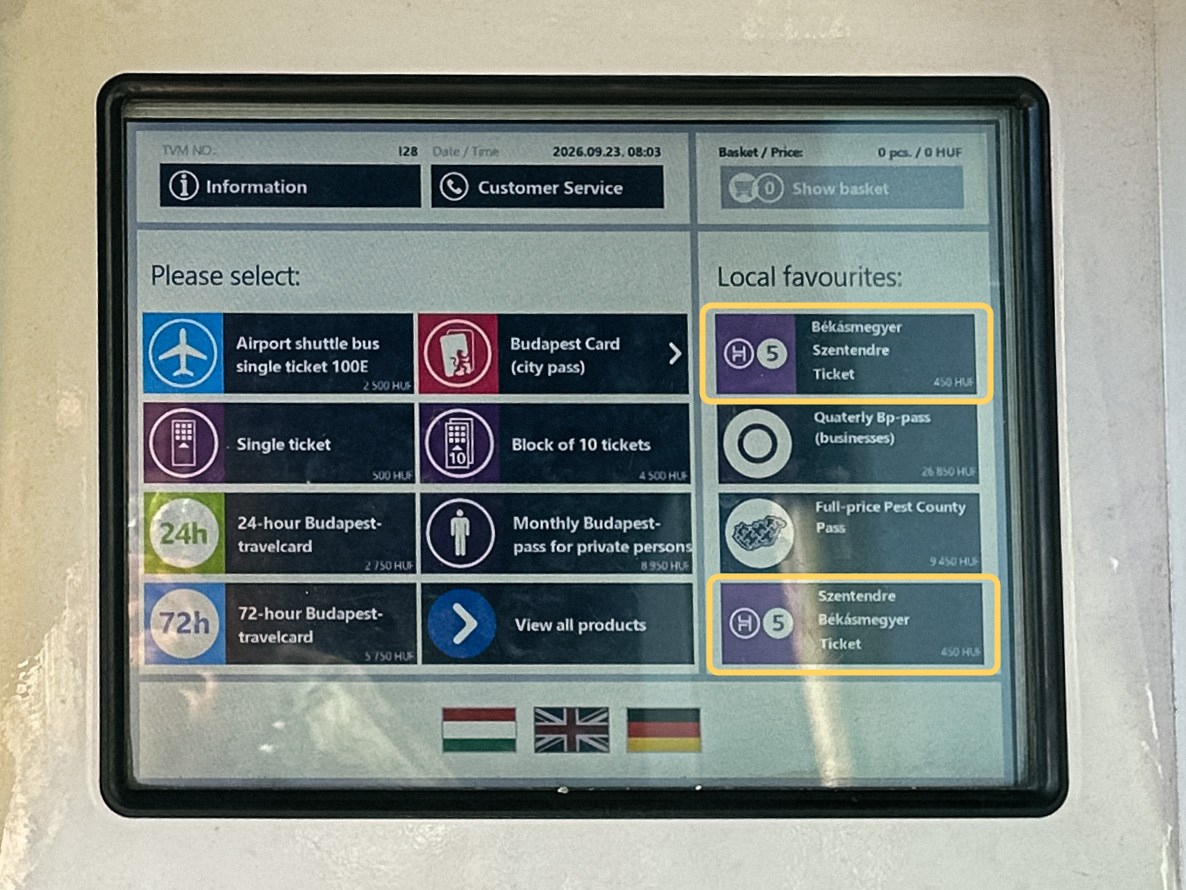
At purple BKK ticket machines, buy two Single Tickets (one for each direction), plus a “Békásmegyer – Szentendre Ticket” (450 HUF) for the outward journey and a “Szentendre – Békásmegyer Ticket” (450 HUF) for the return.
The Pest County24 day ticket (999 HUF) isn’t sold at BKK ticket machines. You can buy it in the MÁVPlusz app or from yellow MÁV ticket machines at locations where they are available.
For online tickets, see MÁV ticket sales or the MÁVPlusz app. Budapest singles are sold in BudapestGO.
Validation and ticket checks
In my experience, ticket inspectors do check fares on the H5.
For a paper Budapest single ticket, use the validator on board. Insert the ticket and, if it’s a manual validator, pull the black frame towards you to punch it.


The HÉV extension ticket doesn’t need to be validated. Its validity date is printed on the ticket when you buy it, and it’s valid for one journey in the specified direction.
For a digital single ticket in BudapestGO, scan the validation code displayed by the train doors or beside the validators inside. Once validated, the app displays confirmation of your journey.
For travelcards and passes, check the ticket’s stated validity period; they do not need to be validated.
How to return to Budapest

When you’re ready to leave, walk back to Szentendre HÉV station. The return trains are also H5, this time towards Batthyány tér. Since Szentendre is the end of the line, you won’t have to worry about accidentally continuing farther north. But do check the destination display before boarding: the train you want will say Batthyány tér. At Szentendre station, the screens show how many minutes are left before the next train to Budapest.
By boat or by bicycle
There are also seasonal boats between Budapest and Szentendre. Dates and tickets are listed on the MAHART PassNave website; unlike the H5, this isn’t a year-round option.
Or, if you’re in the mood for a little adventure, rent a bicycle in Budapest and follow the scenic EuroVelo 6 route along the Danube. Much of the ride takes you away from traffic, through leafy riverside paths, patches of woodland and open fields, with the hills appearing in the distance. I enjoyed the journey so much that I returned to do it again a year later. You can read about the ride, bicycle rental and all the little discoveries in Budapest to Szentendre by Bike.

And here’s a useful detail: you don’t necessarily have to cycle back. H5 trains have designated spaces for bicycles, generally in the middle carriage, marked with bicycle symbols. You’ll need the appropriate bicycle ticket in addition to your own fare.
So if your legs decide they’ve had enough adventure for one day, the train can take both you and your bicycle back to Budapest.
One last little tip before you set off: at Dumtsa Jenő utca 22, near the entrance to the historic centre, there’s a Tourinform office where maps and local information are available. A public toilet is tucked away at the end of the passage. Entry costs 300 HUF (€1), and the machine accepts coins and credit cards. Both are useful to know about before disappearing into the little streets.
The story
The Great Flood of 1838: Six Surviving Markers
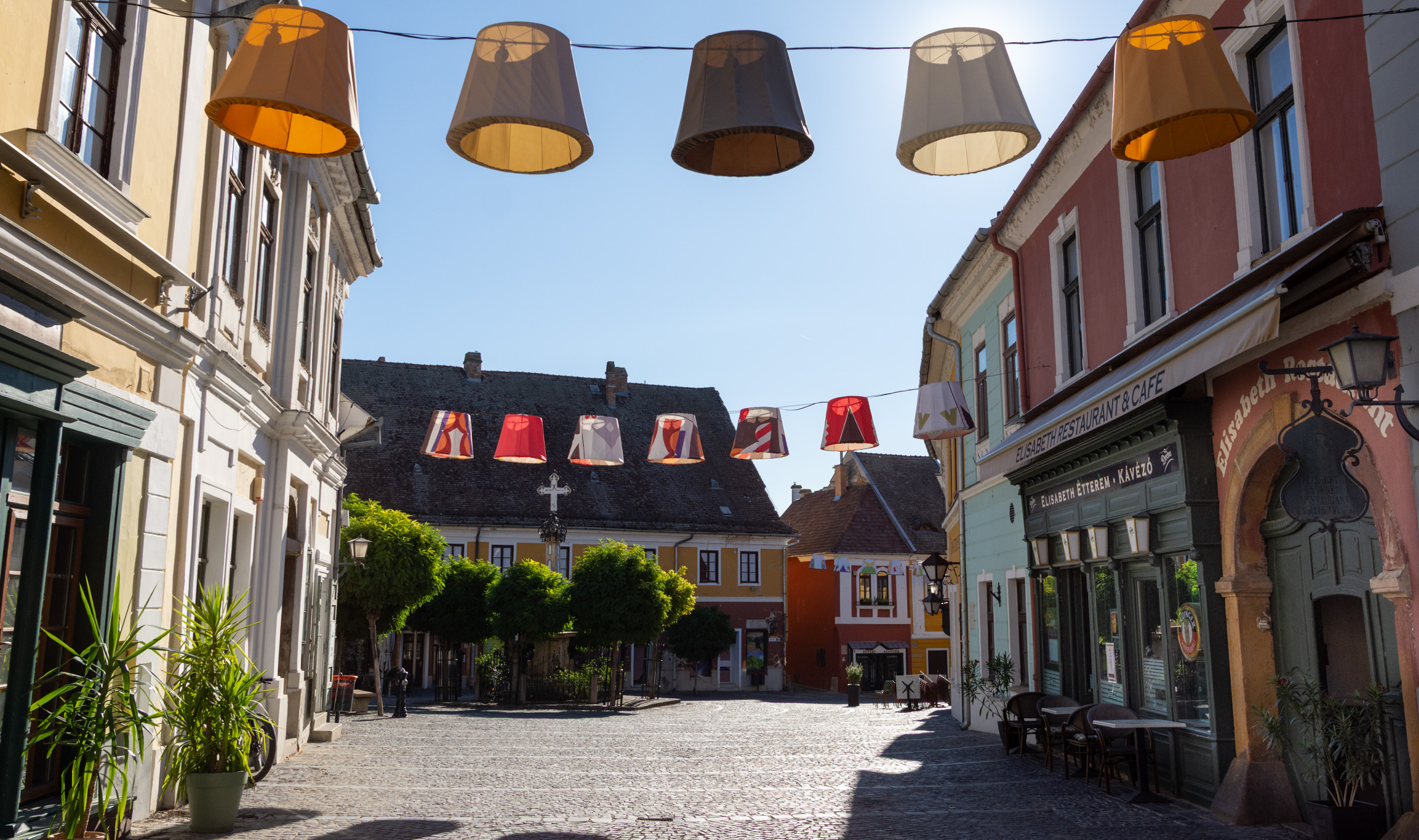
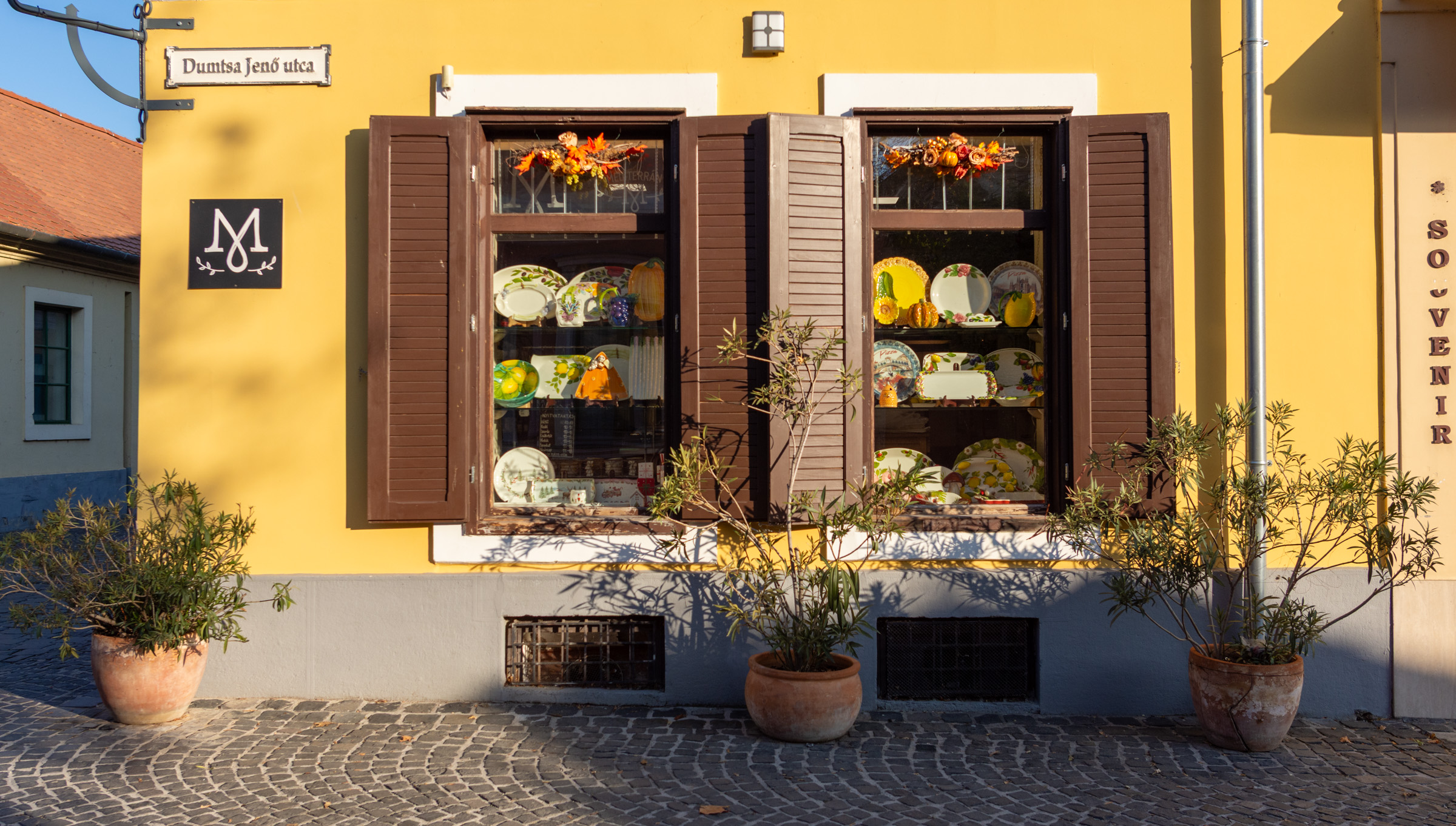
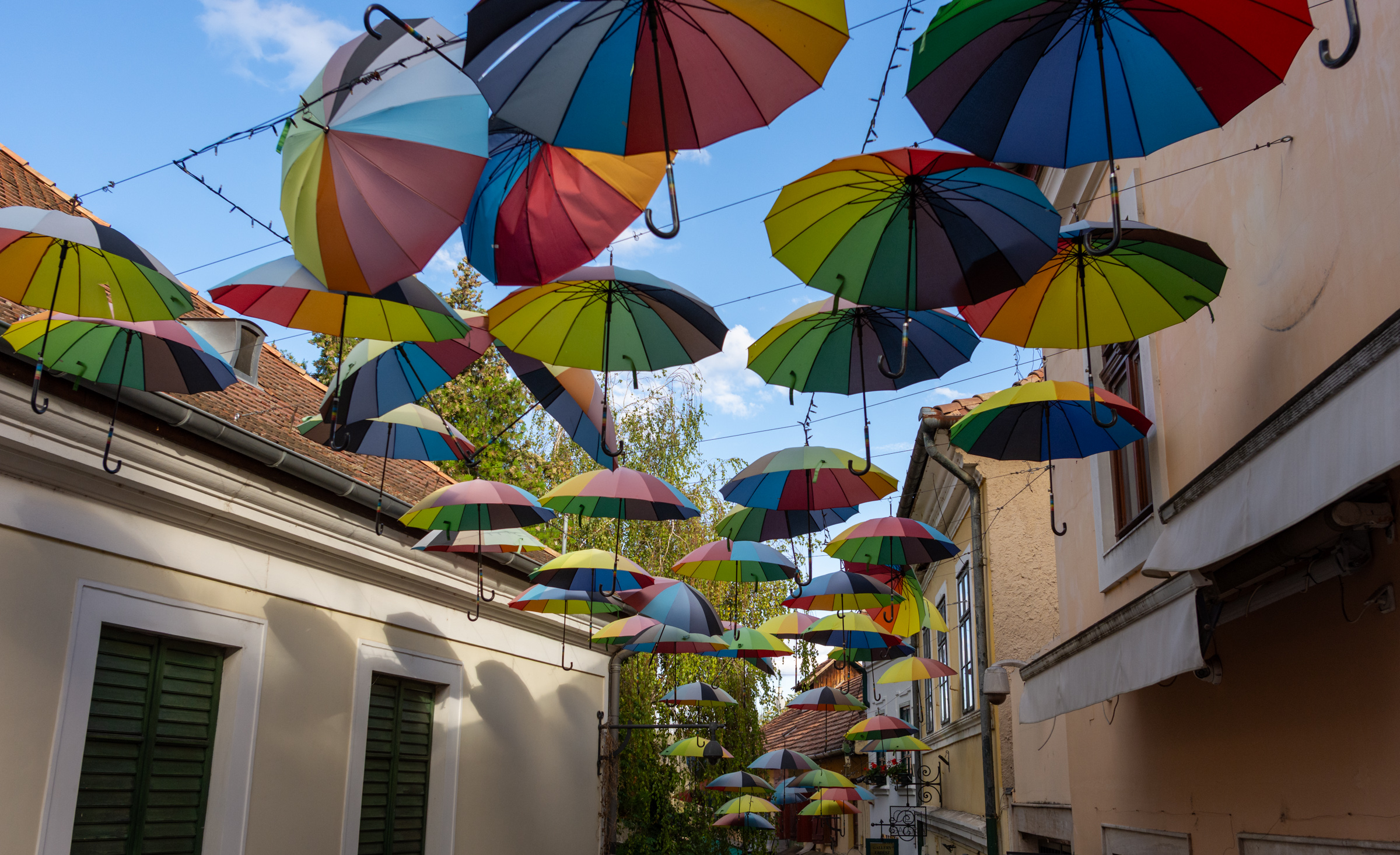
The walk into old Szentendre begins on Dumtsa Jenő utca. There are ceramics in shop windows, flowers outside doorways and passages that disappear between houses. Above the streets hang colourful decorations; beyond them, church towers rise over the rooftops. Szentendre is known as a town of artists. Among these closely set houses and warm-coloured walls, it’s easy to see why.

But one of the first things that caught my attention was almost colourless.
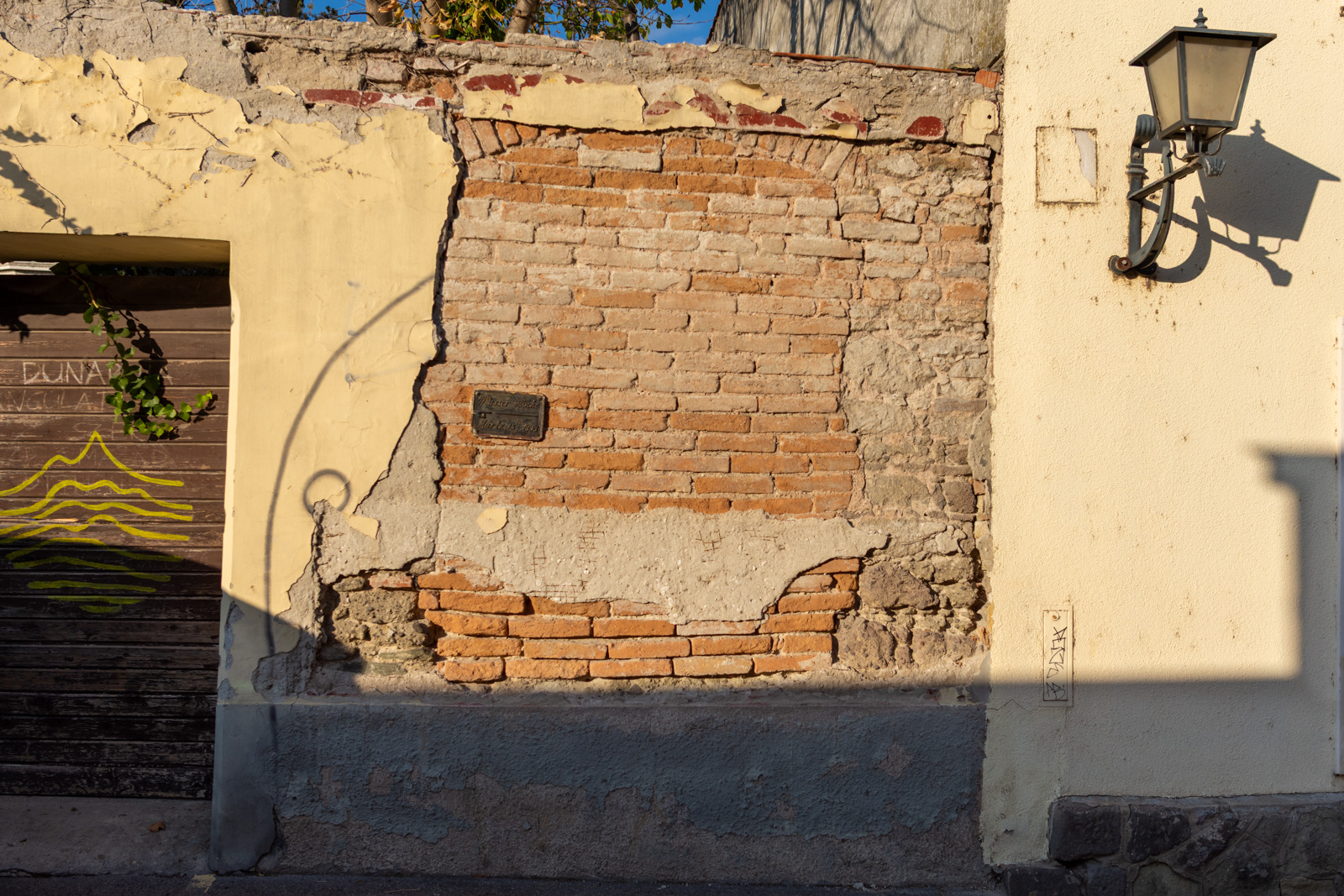
On a wall near a small passage is a little stone marker. It has a German inscription, a date and a carved hand pointing to a line.
Wasserhöhe. Water level.
15 März 1838.
The line marks how high the Danube rose during the great flood of that year.
The winter had been so cold that the river froze. When the ice broke up, large pieces jammed together and blocked the water’s path. The river rose behind them, then spilled into the streets of Szentendre.
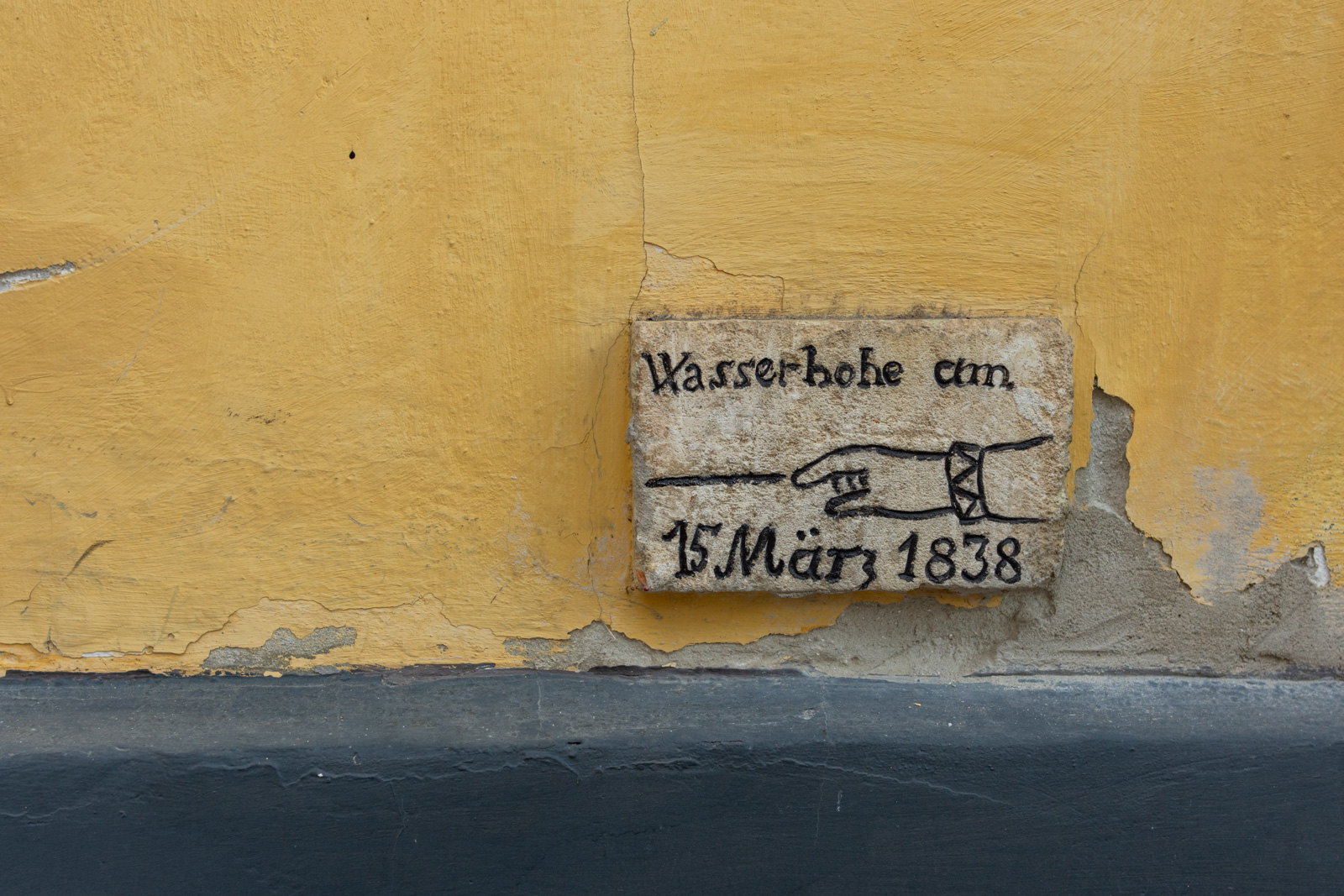
An old record from Preobrazsenszka Church tells of 208 houses collapsing. The water had risen so high that even the church fence had disappeared beneath it.
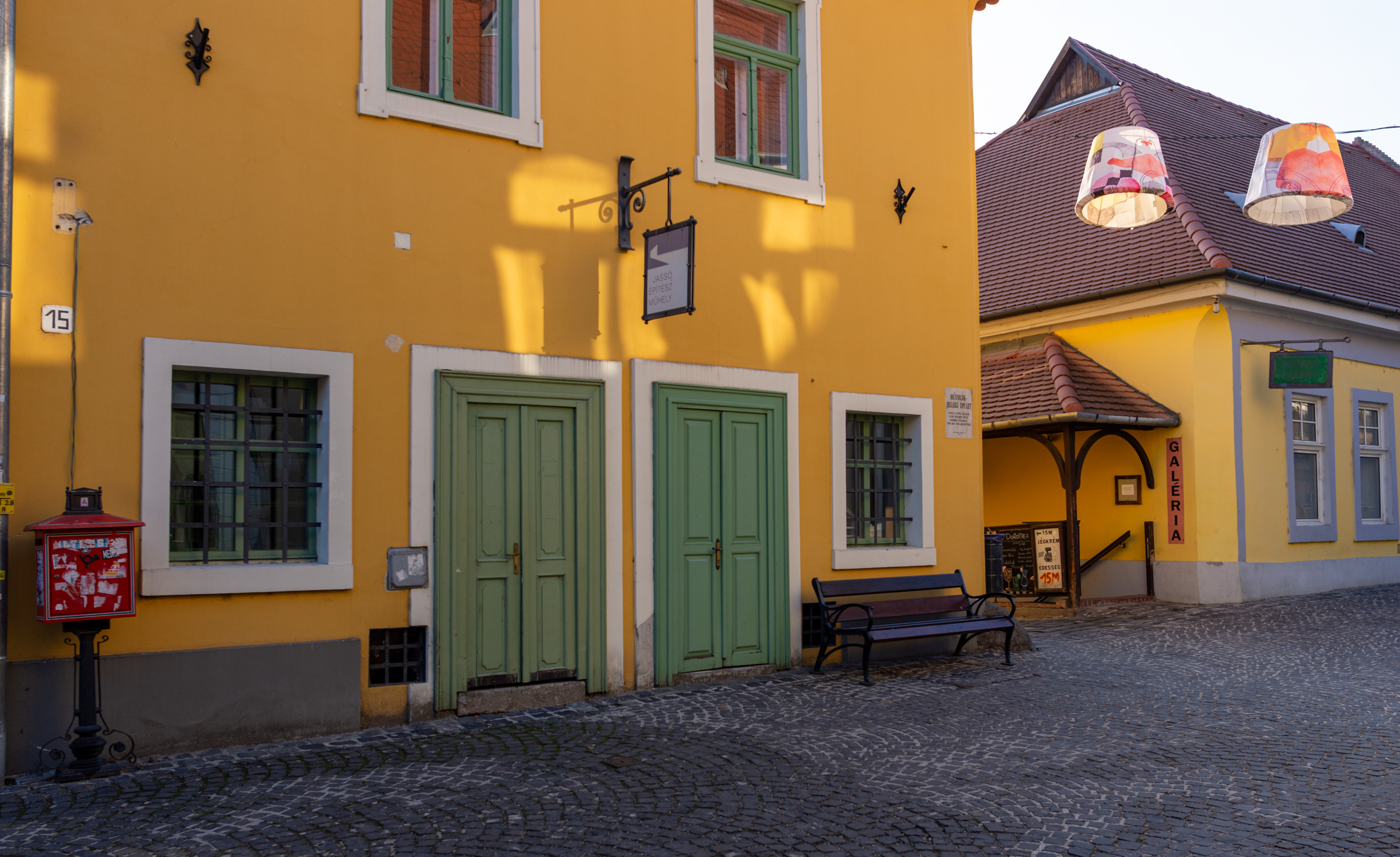
According to a local historical account published in Szentendre és Vidéke, six markers from the 1838 flood are known to survive. There are four on houses — at Dumtsa Jenő utca 22, Péter Pál utca 6, Görög utca 4 and Kör utca — and two by Pozsarevacska Church. Some have a pointing hand, others only a line. Most inscriptions are German; one of the church markers is Serbian.
Nearly two centuries have passed since the great flood of 1838. The streets have long returned to their ordinary lives, but a small mark on a wall still shows where the water once stood.
The story
The Secret Language of a Merchant’s House:
A Cross, a “4”, and an Anchor
Dumtsa Jenő utca opens onto Fő tér, Szentendre’s main square, surrounded by old merchant houses. At number 17 stands the Pálffy House, where I spent longer than expected looking for an old emblem. I knew it was somewhere on the façade, but managed to walk past the Baroque gateway several times before noticing it on the keystone directly above the entrance.

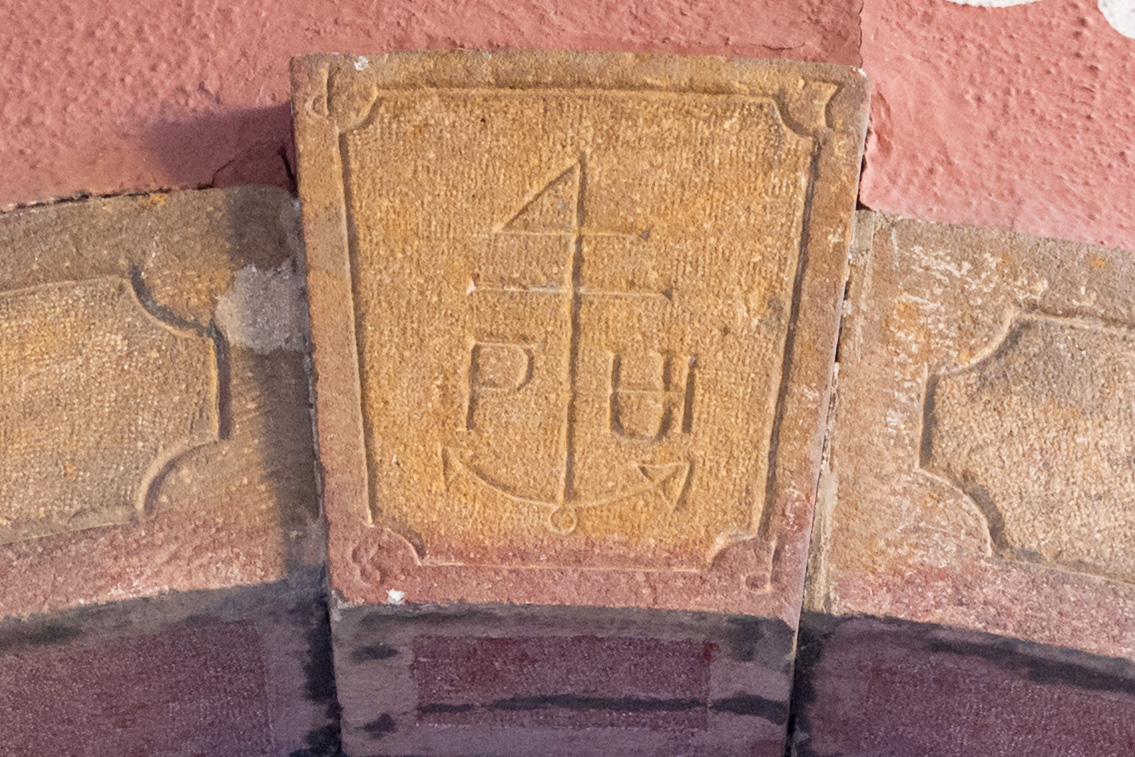
The town’s historical description explains that the emblem contains three elements: an Orthodox cross, an anchor and the number four.
The symbol belonged to the Serbian Privileged Commercial Association.
The cross represented the merchants’ faith.
The anchor referred to their trade, much of which depended on transport along the Danube.
And the number four? It represented the idea of an honest four-percent profit.
Imagine having your commercial principles carved into the entrance of your house.
It must have been difficult to raise your prices with four percent carved above the door 🙂
But why was a Serbian merchants’ emblem above the door of a house in a Hungarian town?
The Serbian Town That Practically Rebuilt Szentendre
For centuries, the Ottoman Empire had been advancing through the Balkans and into Central Europe. Wars with the Habsburgs repeatedly drove people from their homes, sending families north in search of safety.
In 1690, after Ottoman forces recaptured Belgrade, a great migration brought thousands of Orthodox Serbs and other Balkan refugees into Habsburg-controlled Hungary.
Many came to Szentendre.
By then, the town lay in ruins and was almost deserted. According to Szentendre’s official historical account, around 6,000 people arrived during this wave of migration.
They brought their trades, languages and traditions. Some were merchants, others craftsmen, farmers and priests. And although they had travelled north together, they had not all come from the same place.
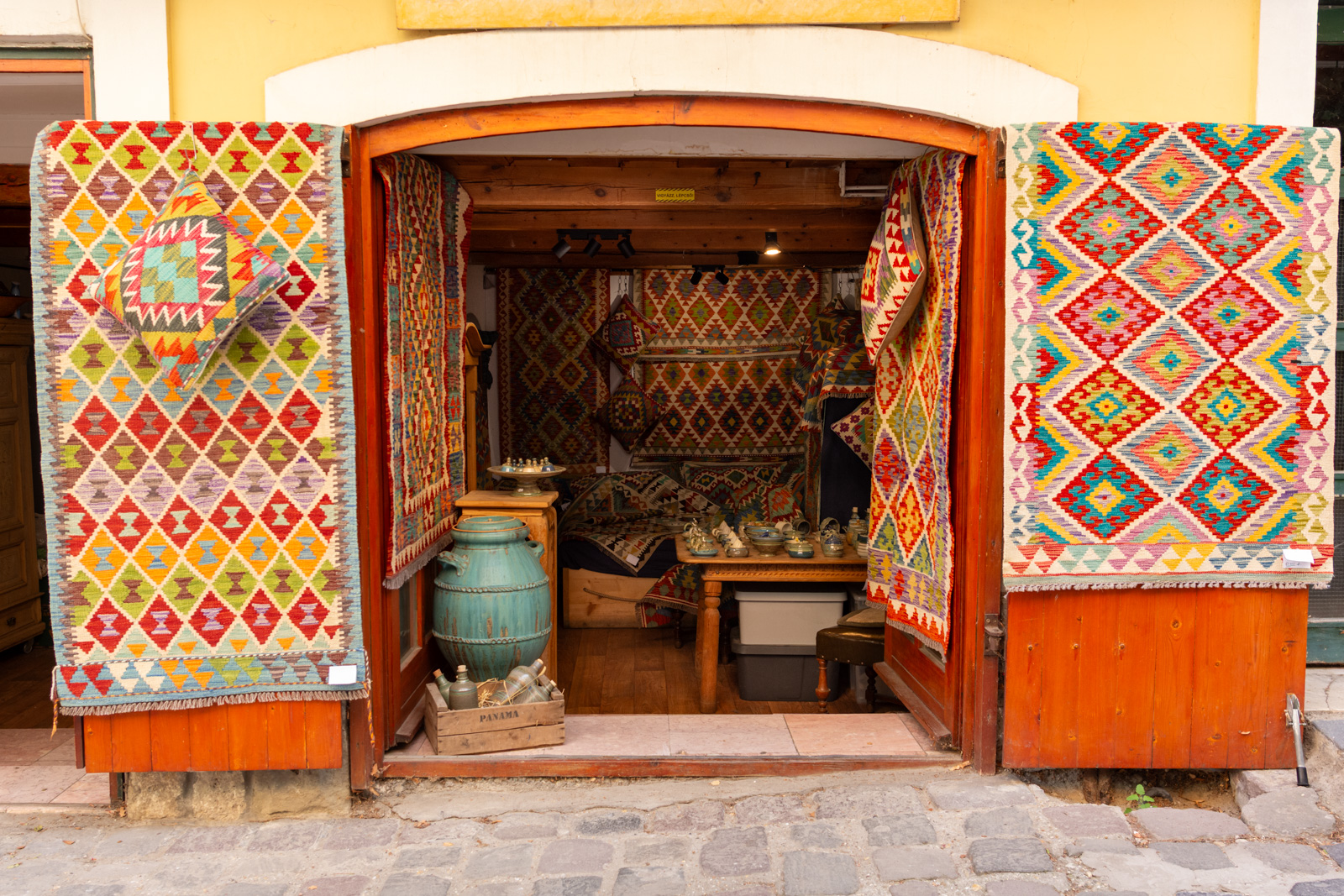

People from different parts of the Balkans settled in their own neighbourhoods, each community gathering around a church. At first, these churches were built of wood. Over the following decades, stone and brick replaced the wooden buildings.

Over the following century, trade flourished along the Danube. Szentendre grew into a prosperous Serbian merchant town, and substantial houses rose around Fő tér.
The emblem above the gateway of number 17 belongs to that history. Its cross, anchor and promise of an honest profit tell us something about the merchants who helped transform a ruined settlement into the town we see today.
And the number four appears above another doorway on Fő tér. At number 8, a Baroque merchant’s house dating from 1737 still has the symbol carved into its keystone.
As local historian Katalin Török explains, merchant houses around Fő tér were built with trade in mind. Shops and workshops opened directly onto the street, while cellars and attics were used to store goods.
A home, a workplace and a warehouse — all under one roof.
Nearly three centuries later, there’s still a little shop beneath the old archway.
And in the middle of the square, Szentendre’s Serbian merchants left another monument.
But this one comes with a darker story.
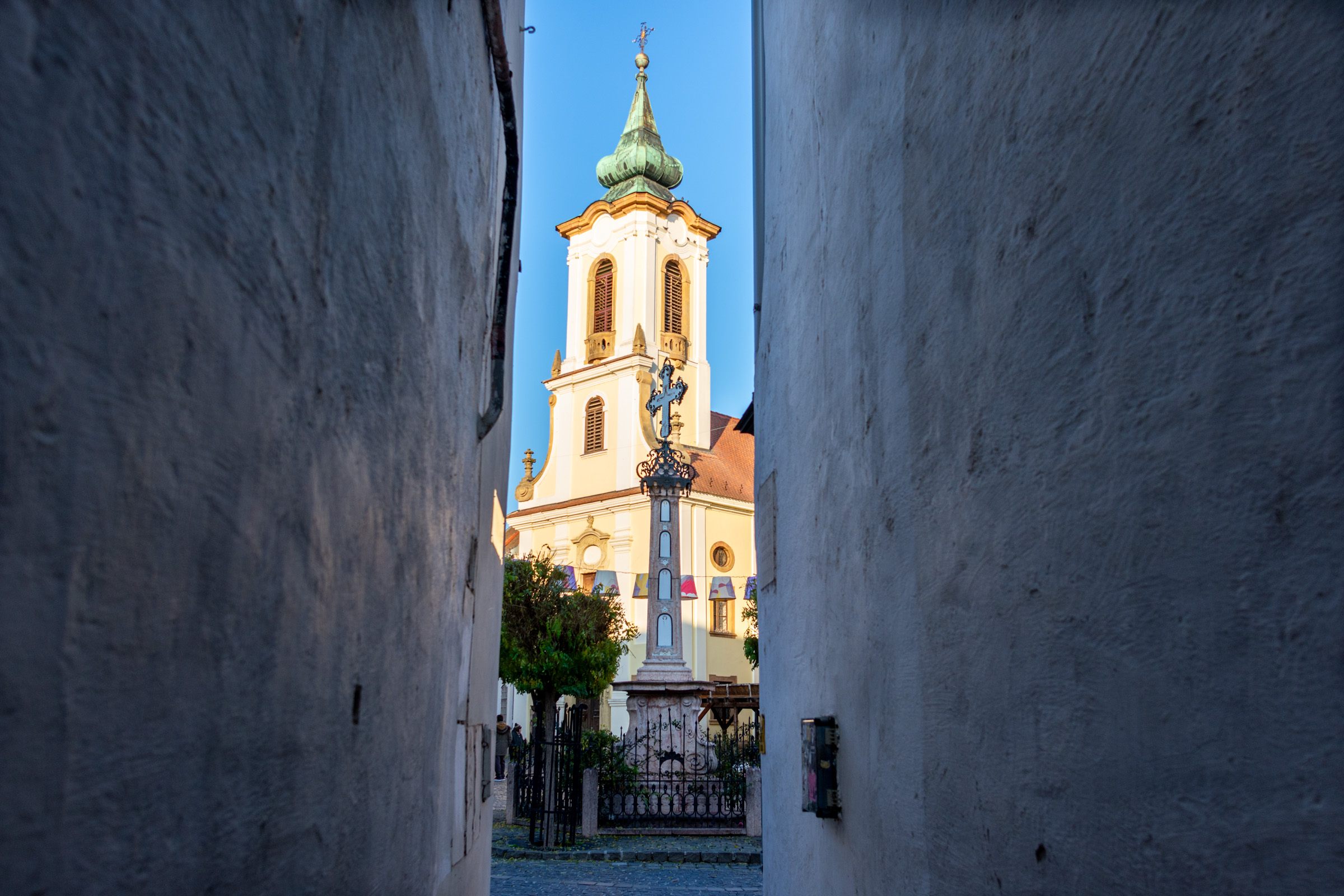
The story
The Plague Cross of 1763:
The Story Above and the Legend Below
The monument is known as the Pestiskereszt, or Plague Cross.
In 1763, Szentendre’s Serbian merchants erected it in gratitude for their town having escaped a devastating plague epidemic.
The cross stands on a three-sided pedestal, each side bearing an inscription in Church Slavonic.
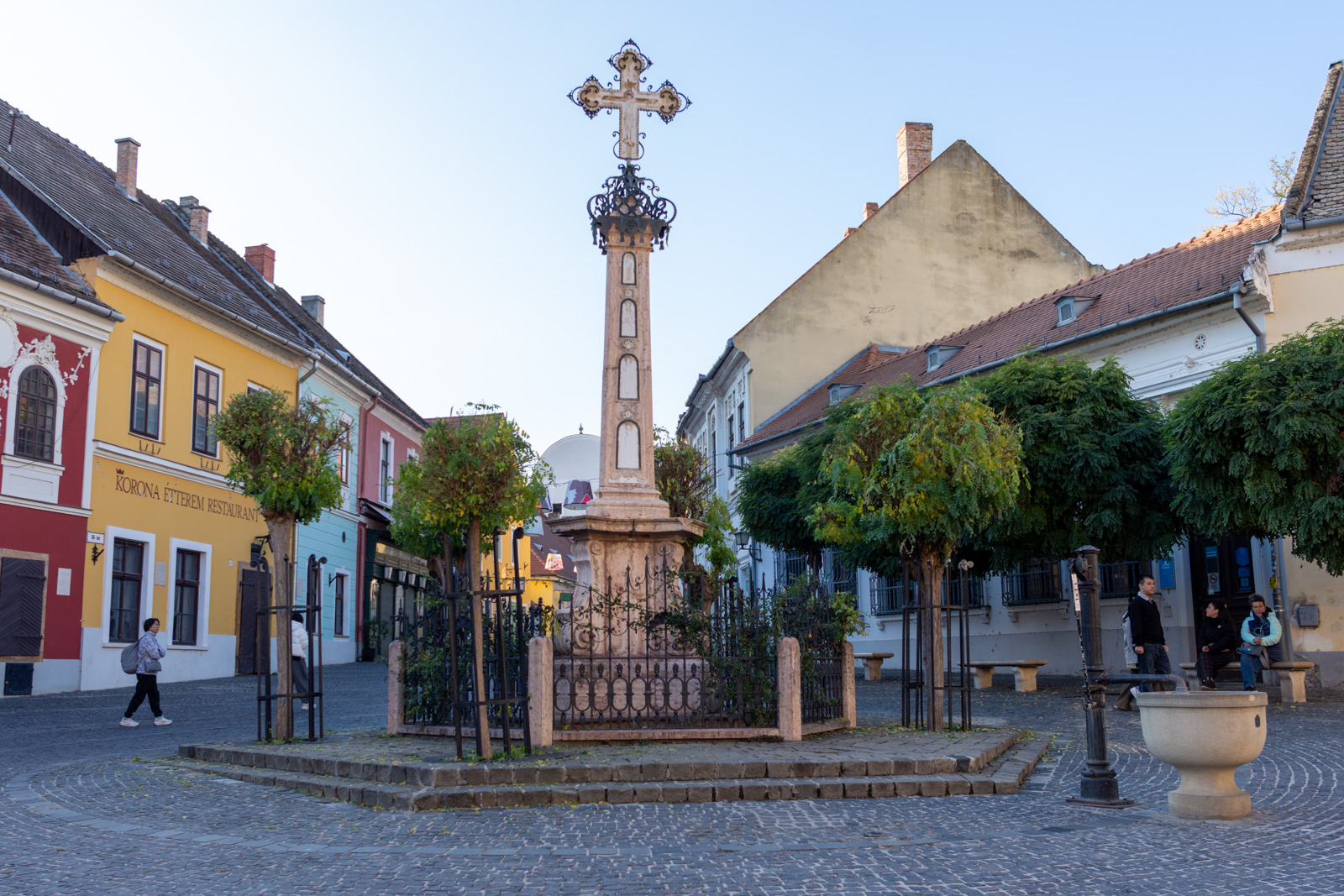
On the northern side, the merchants recorded who had built it:
“This holy cross was erected by the Serbian Privileged Merchants’ Association of Szentendre in 1763.”
The southern inscription tells of its first restoration:
“The same association lovingly restored and adorned it in 1836.”
And on the eastern side, the message is much shorter:
“Renewed in 1901.”
Higher up, the column is decorated with images of the twelve apostles, easy to miss from a distance.
The cross has undergone further restoration since then, and some of its original details have been lost and replaced with accurate copies.
But there is another story about this monument, one that was never carved into its stone.
According to an old local legend, the plague did not leave Szentendre entirely untouched.
It claimed a single victim.
The townspeople buried her upside down beneath the cross.
Why upside down?
Because, the story goes, they believed this would trap the plague beneath the earth. If it could not find its way out, it could never return to the town.
Before the stories get any darker, let’s escape to the riverside.
The story
The Danube Promenade:
Bronze Birds and a Disappearing Wall

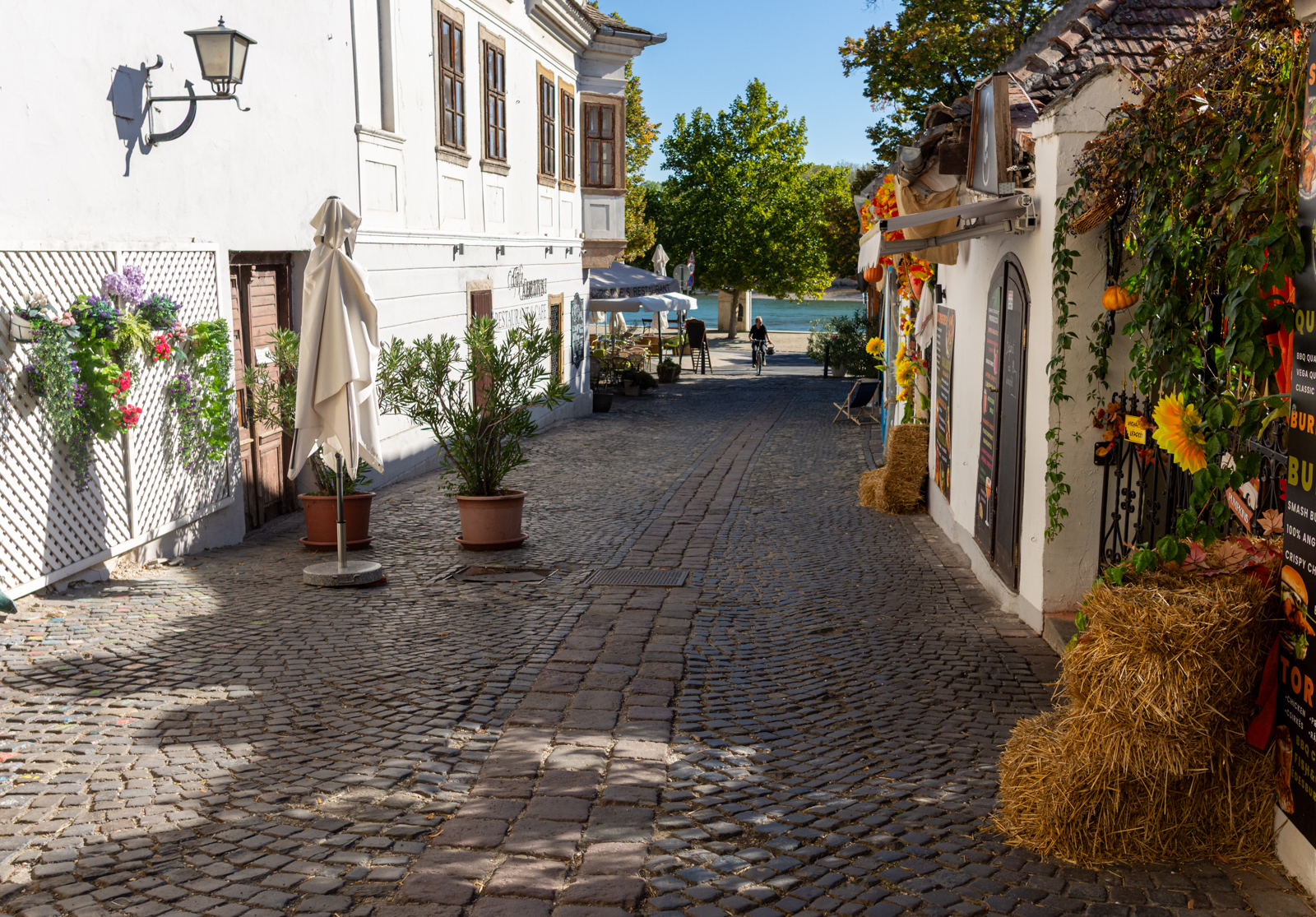
From Fő tér, narrow streets lead down to Duna korzó, the promenade beside the Danube.
Across the Danube lies Szentendre Island. Behind the promenade, the rooftops of the old town climb towards its church towers.
A little farther along, near Lázár cár tér, three curious bronze birds perch on the edge of a fountain, sending thin streams of water from their beaks.
They are the work of Hungarian sculptor Tamás Asszonyi. Each bird has its own posture and expression, but the most surprising part of the fountain is the stone beneath them.
It weighs around 4.5 tonnes and came all the way from the Adriatic coast, near Fiume — now Rijeka, in Croatia.
A little piece of the Adriatic, lying beside the Danube.
There’s another playful detail in Asszonyi’s design. Instead of placing a warning sign beside the fountain, he incorporated the message into the bronze figures themselves. In Hungarian, English and German, the birds tell visitors that the water isn’t safe to drink.
Not every fountain comes with a warning from the creatures providing the water.
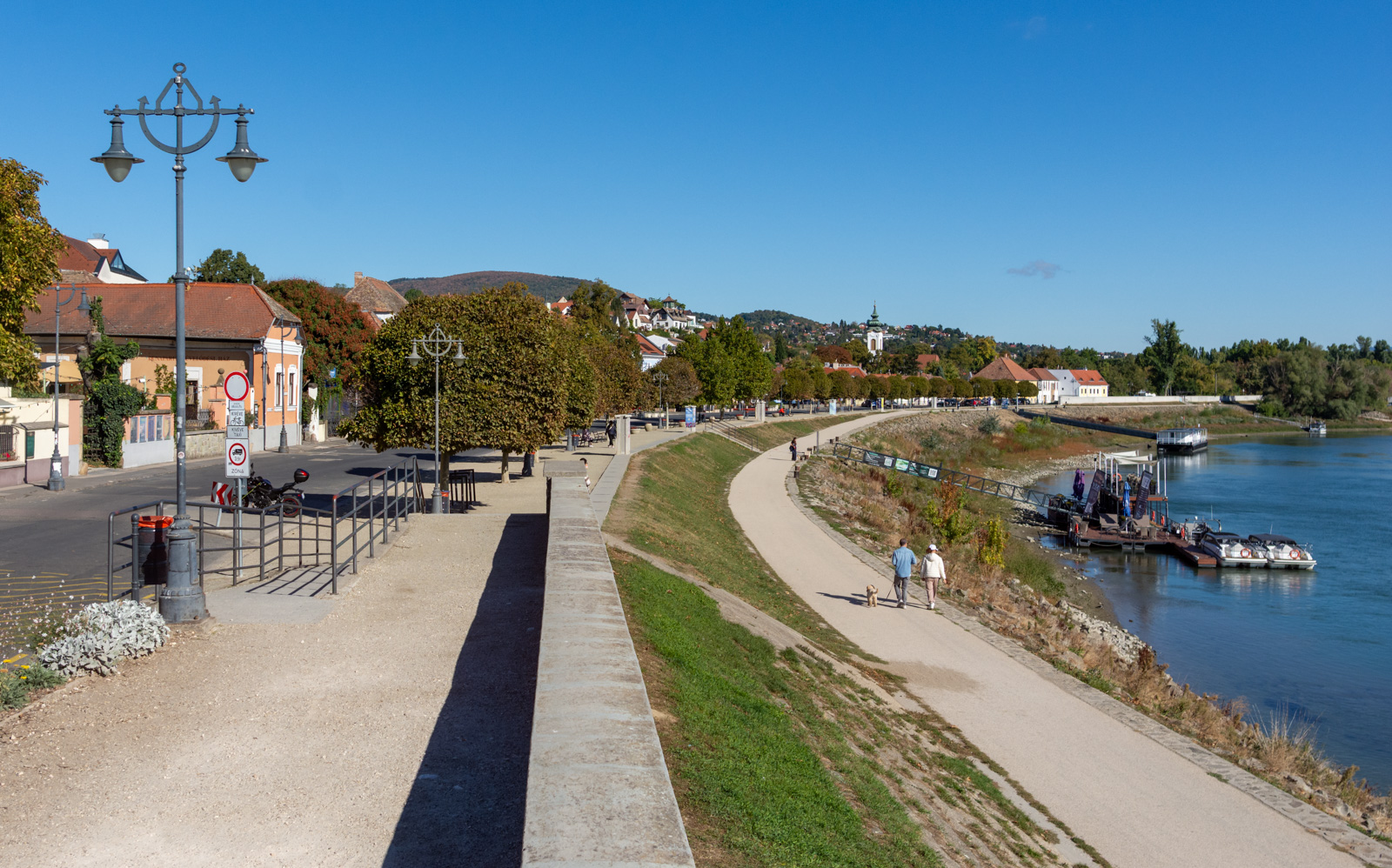
The Danube, however, has given Szentendre more serious reasons to be cautious.
For decades, the riverside was protected by a permanent embankment built in 1965. It blocked the view of the Danube and, over time, no longer provided adequate protection against flooding.
In 2013, the town introduced a new solution: 333 metres of mobile flood barrier, assembled only when the river threatens to overflow. The rest of the time, its sections are stored away, leaving the promenade open to views of the Danube.
And almost immediately, the new barrier faced its first real challenge.
In June 2013, the Danube rose to a record 796 centimetres on the local water-level gauge. The newly completed barrier held, protecting the historic centre from the flood.
The old walls of Szentendre had enough flood marks to remember.
The story
Wine Written in Stone: Grapes Above the Doorways
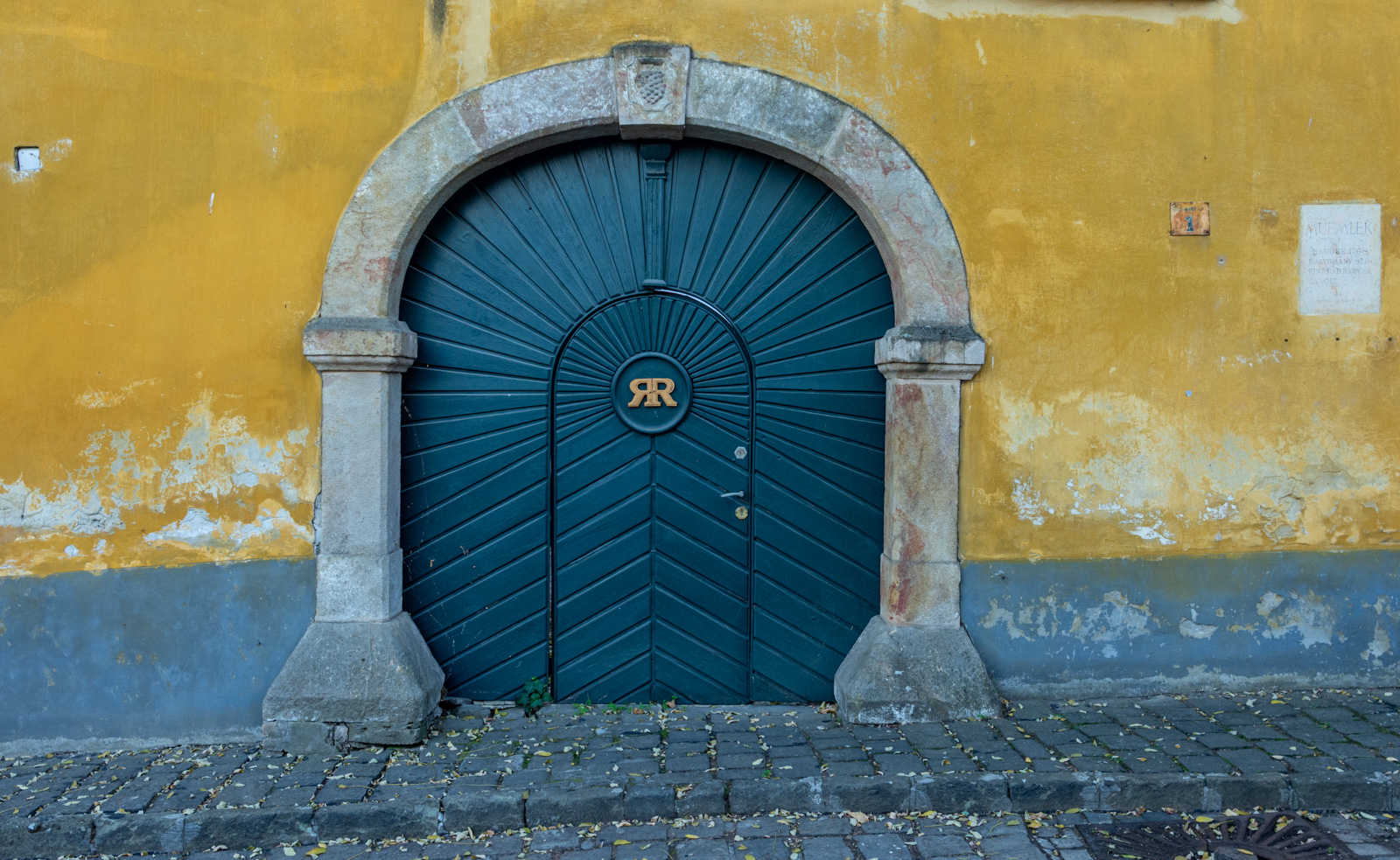
A few streets away, on Rab Ráby tér, stands an old yellow house named after Mátyás Ráby.
Ráby was a real eighteenth-century figure whose adventures later inspired the Hungarian writer Mór Jókai and his 1879 novel Rab Ráby. But the connection between the man and the house that bears his name is not quite as straightforward as the story suggests.
In 2025, researchers at the Ferenczy Museum took another look at the surviving documents.
After his brother-in-law, János Edlinger, died in 1784, Ráby moved into a house belonging to his sister’s family. But there was a dispute over the property. Edlinger had owed Ráby money, and Ráby claimed that his brother-in-law had allowed him to use the house in connection with that debt. No document confirming a transfer of ownership has been found.
Then comes an intriguing detail.
A land register from 1787 lists a certain Raab Matthias as the owner of house number 693.
That sounds promising, until the question of addresses arises. House numbers changed over the centuries, and the researchers could not establish whether number 693 was the same yellow building that stands on Rab Ráby tér today.
Ráby’s own memoirs mention disputes over property, missing possessions and even wine stolen from a cellar.
The yellow building also became a familiar subject in local art. During the twentieth century, it appeared in paintings by Ilosvai Varga István, Bánáti Sverák József and Jeges Ernő.
But the house has a story of its own.
Above its Baroque gateway, a bunch of grapes is carved into the stone, surrounded by the date 1768.
According to Szentendre’s architectural guide, this was once a prosperous winegrower’s house. The grapes were not merely decoration — they offered a clue to the occupation of its original owners.
And there’s an interesting connection to the house at Fő tér 17.
There, a cross, an anchor and the number four represented the Serbian merchants and their trading principles. Here, a bunch of grapes represented winegrowing.
In eighteenth-century Szentendre, the stone above a doorway could serve almost as a business card, revealing something about the people who lived or worked behind it.
The grapes themselves tell another story.
Szentendre’s Lost Vineyards: A Story of Wine and Changing Times
Before Szentendre became known for art galleries and museums, its hills were covered with vineyards.
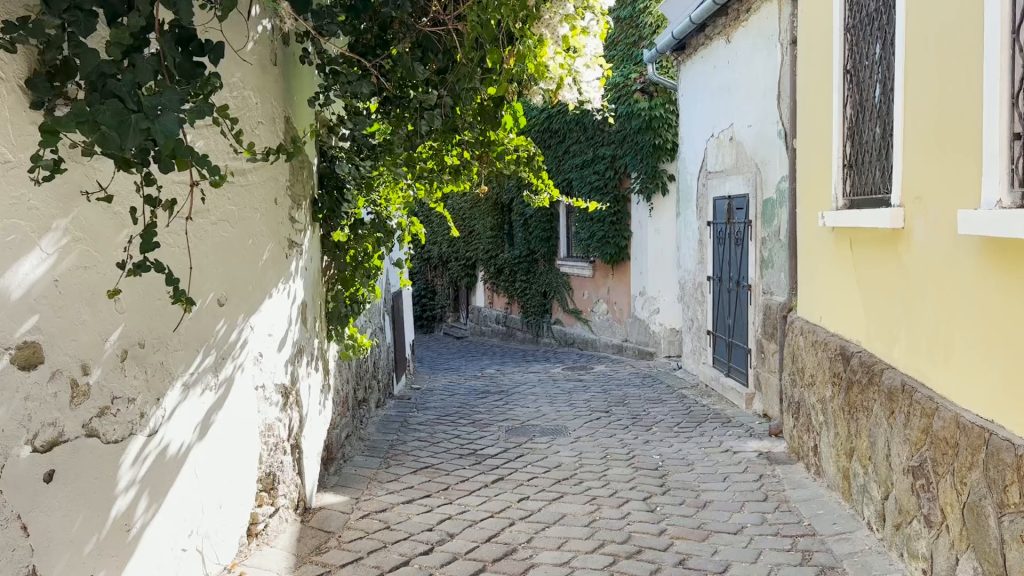
Wine wasn’t a small local sideline. It was one of the town’s main sources of wealth. Merchants traded it, families invested in vineyards, and many people earned their living growing and harvesting grapes. Beneath the houses, stone cellars stored the wine; an architectural guide still describes around two hundred of them.
Then, in 1882, phylloxera reached Szentendre. The insect was tiny, but its effect on grapevines was devastating. Families who had invested heavily in vineyards lost their income, and labourers who depended on the harvest struggled to find work.
The hills gradually changed. Fruit trees replaced many of the vineyards, and the town had to find other ways of making a living.
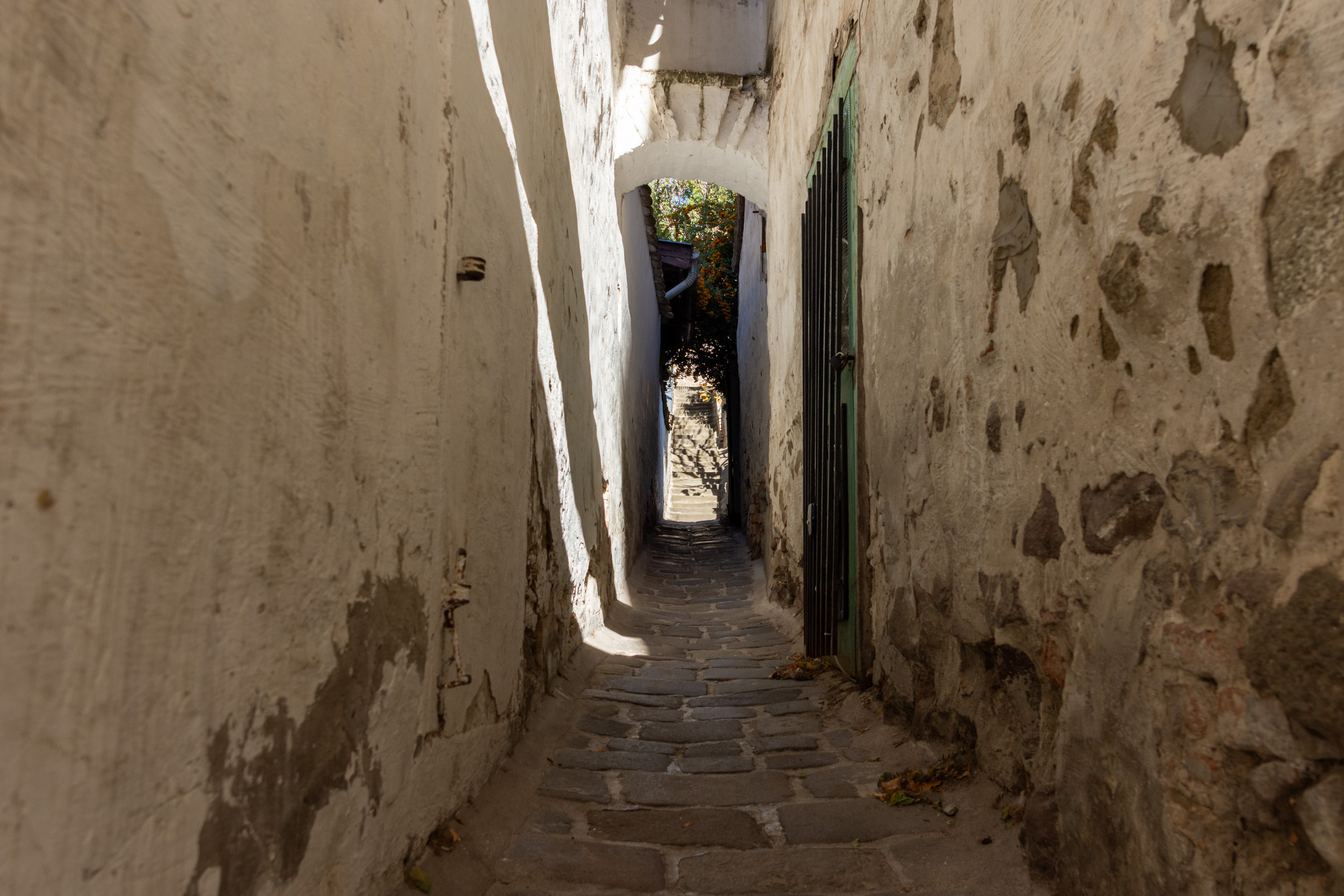
But look above the old gateways, and you’ll still see grapes carved into the stone.
A small reminder of a town that once made its fortune from wine.
The story
Stanglis Kutak: The Wells That Served the Town
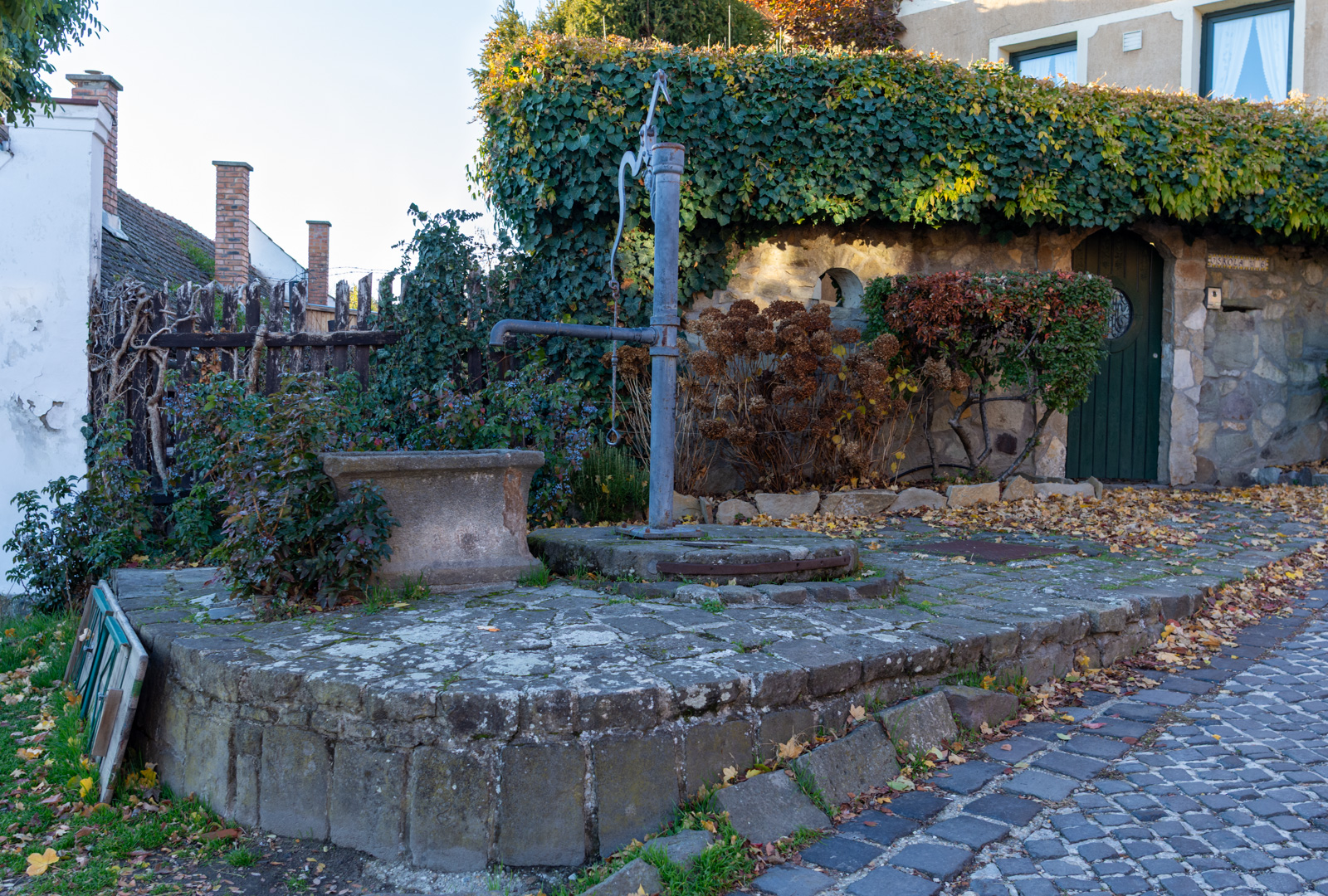
There’s an old iron well on Rab Ráby tér. It’s one of Szentendre’s stanglis kutak — public wells with long handles, once used by residents who had no running water at home.
The handles and ironwork were made by local craftsmen, and the town even remembers the name of the last man who made and maintained them between the world wars: Ljubovics Mito.
Szentendre is famous for its painters and sculptors. But it’s nice to know that its history also has room for someone who cared for something as ordinary as water.
As running water reached people’s homes, most of Szentendre’s old public wells fell out of use. Only two of the historic iron stanglis kutak remain — one on Rab Ráby tér and another on Kmetty tér.
But there’s another well on Fő tér, beside the Plague Cross, with a history of its own.
A well stood here as early as 1794. After the original disappeared, local stonemason Lajos Pap recreated it in sandstone in 2013 and donated it to the town.
In September 2019, a car crashed into it, damaging the ironwork and breaking the stone basin. Repairs were completed by May 2020 — only for another vehicle to reverse into it that October. The basin was replaced once more, and the well returned in March 2021.
Meanwhile, the old iron well on Rab Ráby tér had its own adventure. Restored in July 2024 after years of disuse, it retained its long iron handle, and visitors could now press a button to release thirty seconds of water.
On 29 August, barely a month later, a car knocked it over.
Another restoration was needed.
Szentendre’s old wells, it seems, have a complicated relationship with modern traffic 🙂
The story
Szamárhegy: The Residents of Donkey Hill
One of Szentendre’s old hillside neighbourhoods is called Szamárhegy — Donkey Hill.
The origin of the name isn’t completely certain. It may refer to the donkeys that once carried goods up the steep streets. Another theory links it to samar, a word in a local Dalmatian dialect for a wooden frame used to carry loads on an animal’s back. The outline of the hill is said to resemble its shape.
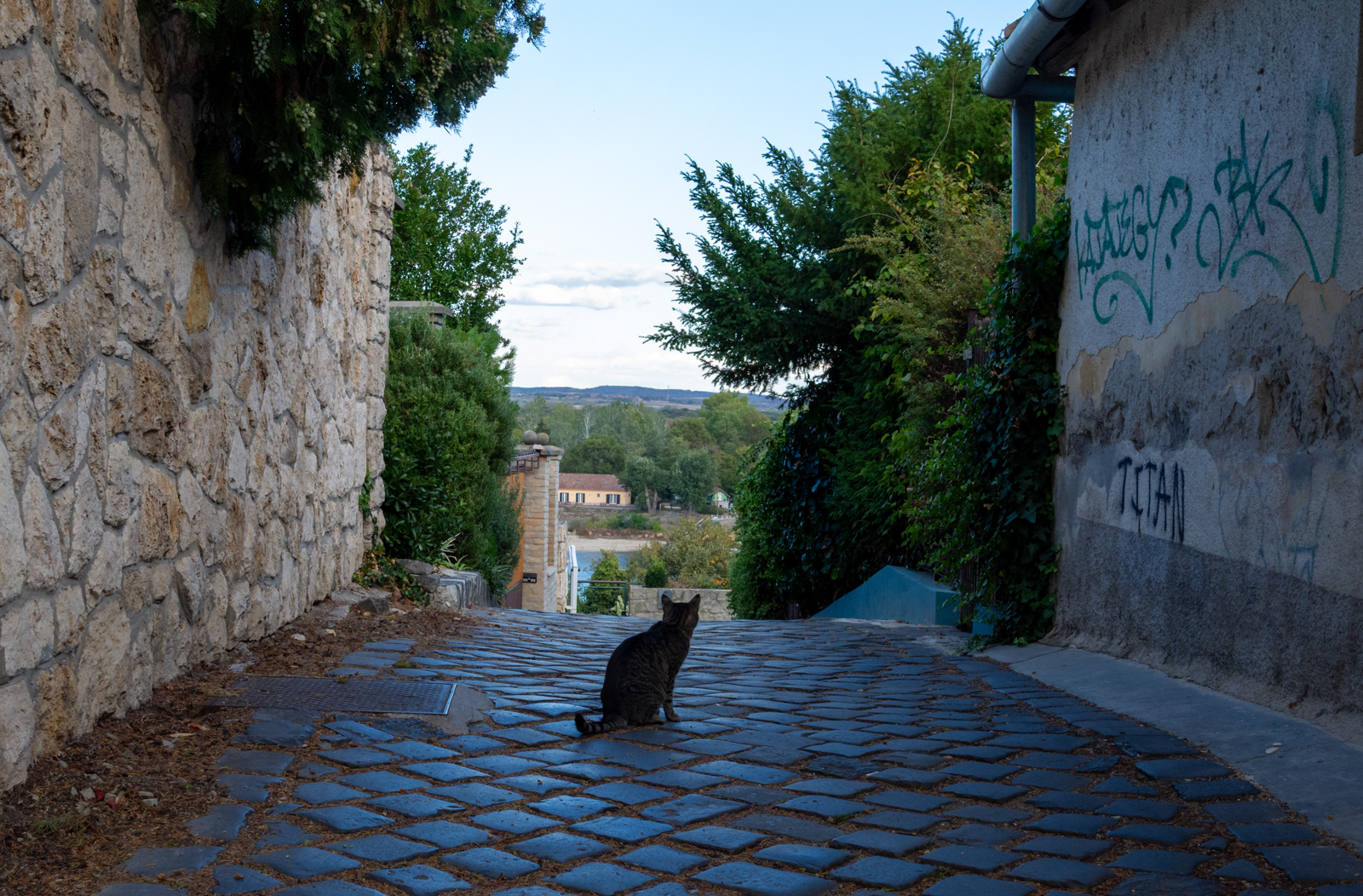
According to local recollections, the Dalmatians who lived here weren’t particularly fond of the name. They preferred to call it Istenhegy, God’s Hill, or Angyalhegy, Angel Hill.
You can hardly blame them.
The name Donkey Hill, however, survived.
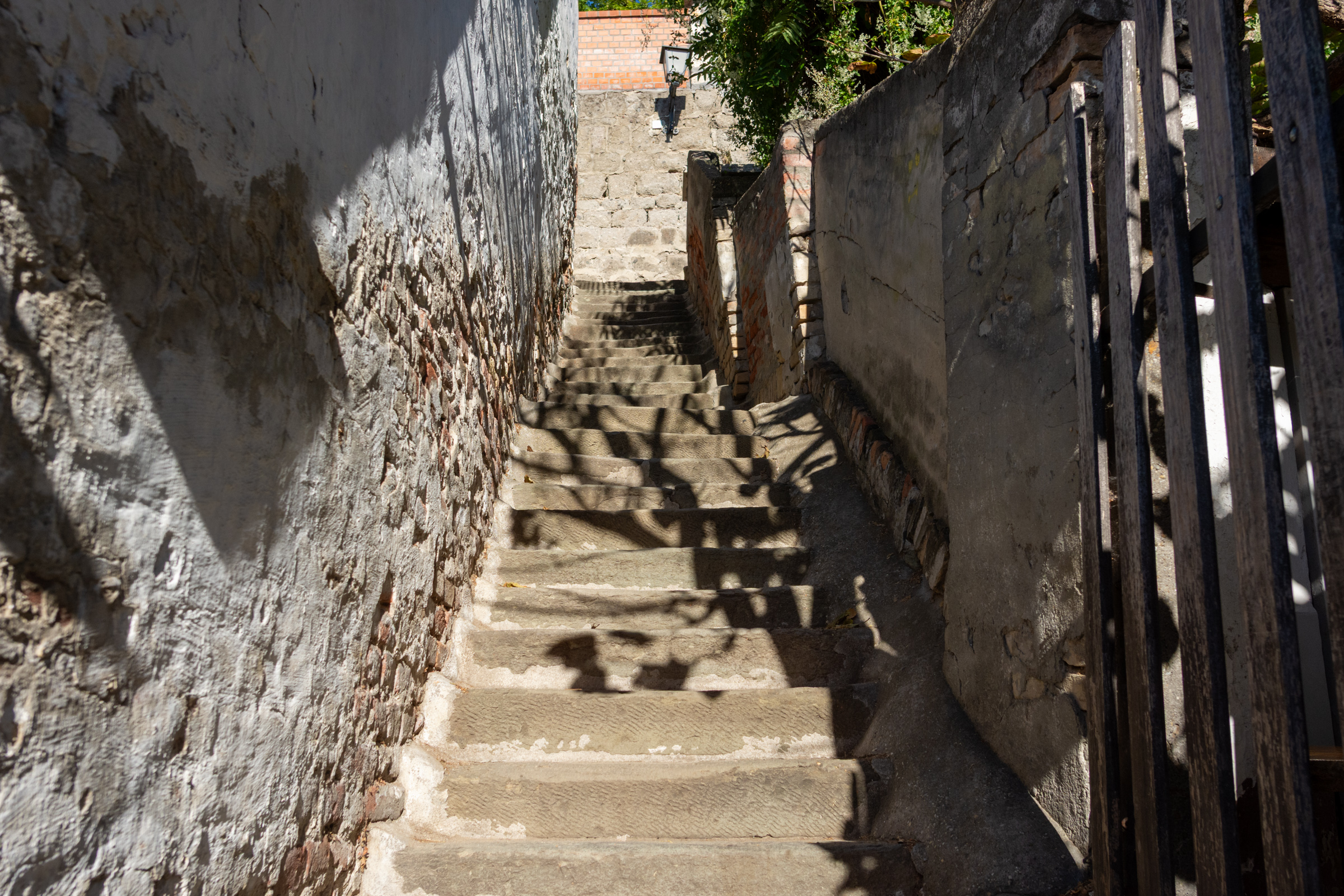
The little houses cling to the slopes, with narrow passages and stone steps winding between them. The neighbourhood was home to Dalmatian Catholics, whose roots lay along the Adriatic coast.
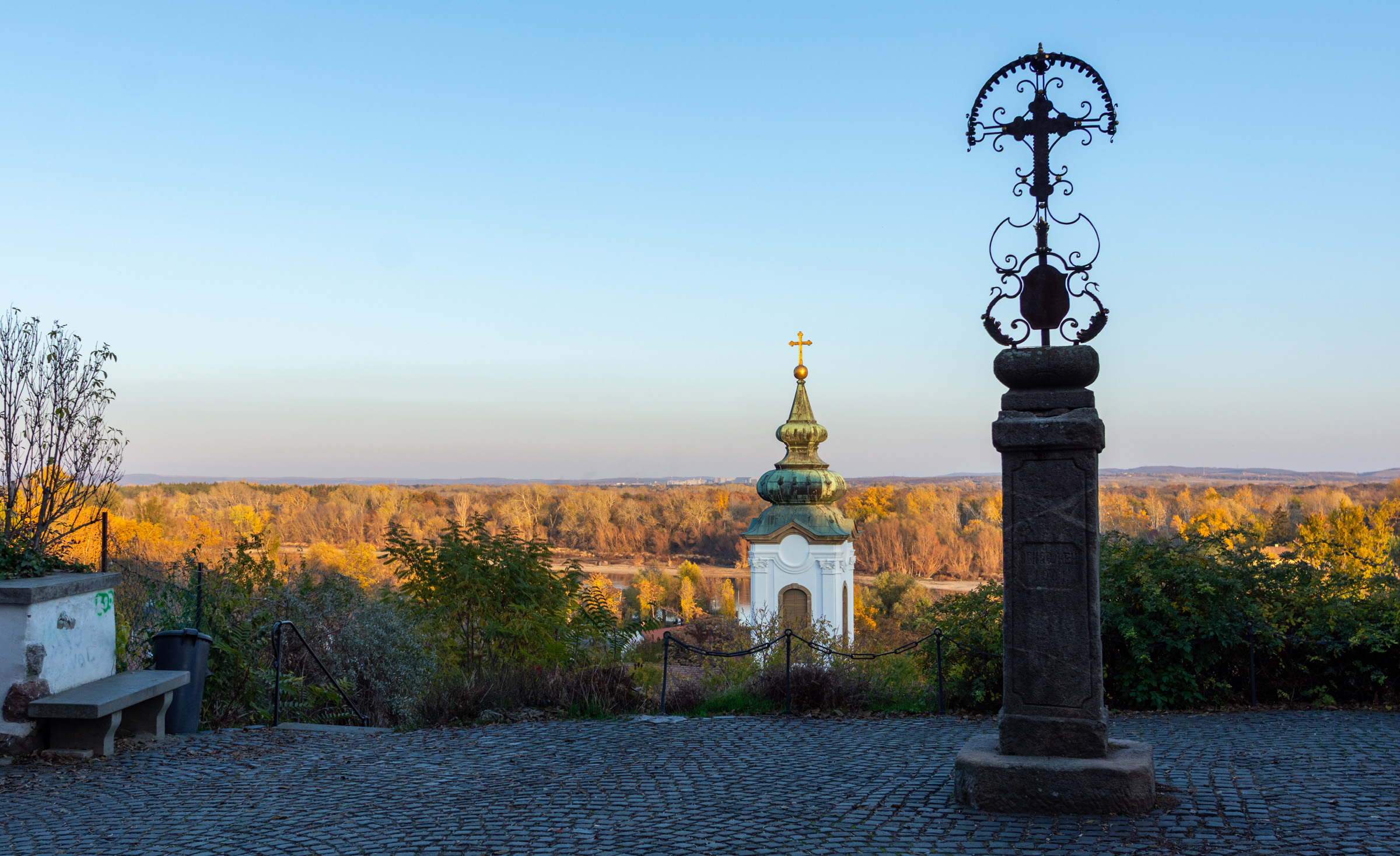
At the top stands the Tobakosok keresztje, or Tanners’ Cross, erected in the eighteenth century by leatherworkers who had come from Bosnia. From here there are views across the roofs to the Danube and Szentendre Island.
Below the hill is Preobrazsenszka Church.
And this church has a lovely connection with the town’s lost vineyards.
Every year on 19 August, the Orthodox community celebrates the Feast of the Transfiguration. The tradition includes blessing grapes from the new harvest — a custom that once held special meaning for Szentendre’s winegrowers.
Later, the celebrations continue in the church garden, with music and dancing.
The vineyards that once covered Szentendre’s hills are largely gone, but grapes still return in the town’s religious traditions.
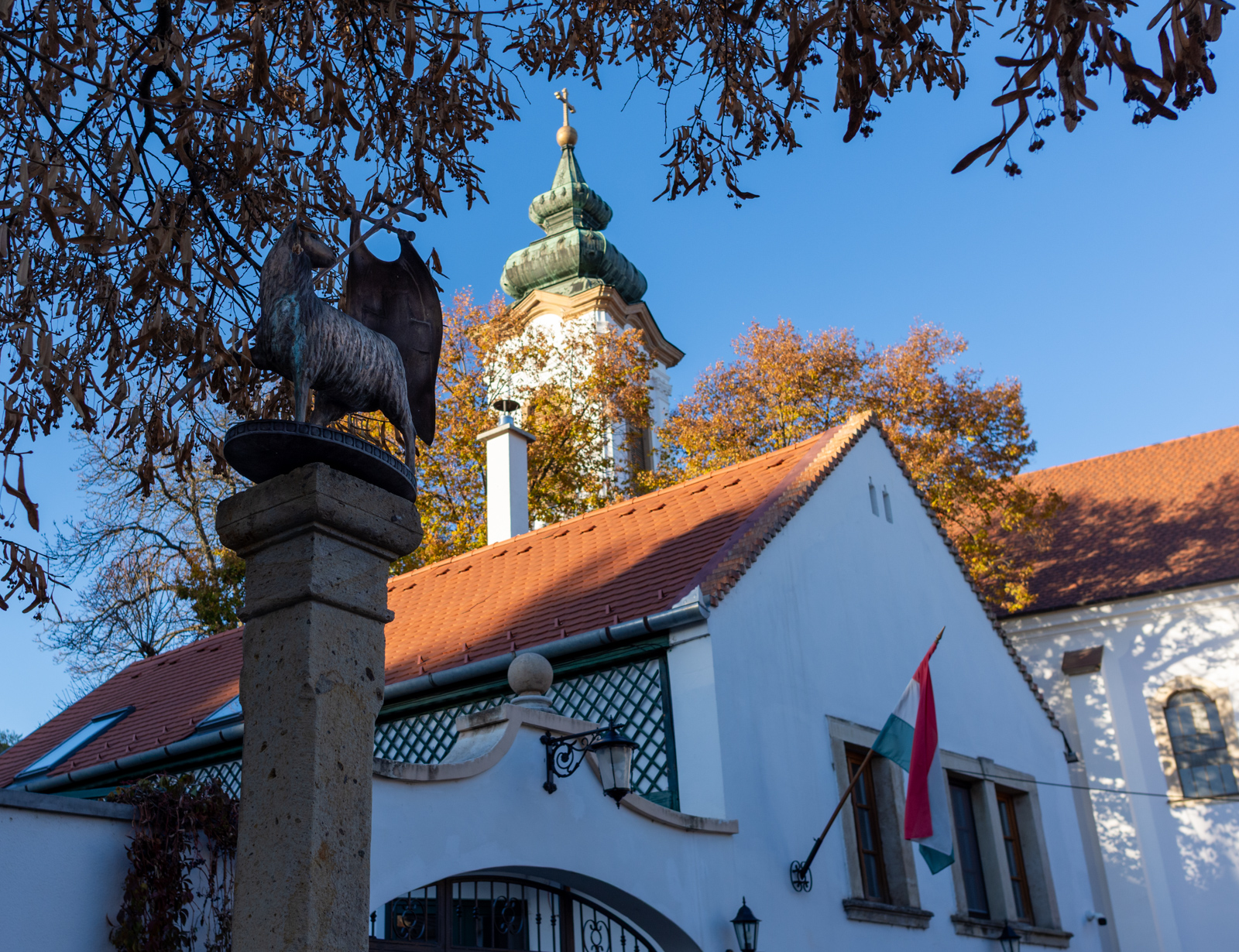
Beside Preobrazsenszka Church stands a small fountain topped by a bronze lamb carrying a flag.
The lamb is no ordinary sheep. It is the Agnus Dei — the Lamb of God, the same figure that appears on Szentendre’s coat of arms, above the entrance to the Town Hall.
Nobody knows exactly when the town first adopted the symbol, but a municipal seal from 1795 already featured the lamb holding a flag.
The fountain was created by sculptor Tamás Asszonyi in memory of the composer and folk-music collector Tihamér Vujicsics. Beneath the bronze lamb is an old Serbian baptismal basin, now serving as the fountain’s bowl.
The date of the inauguration was no coincidence.
The square was inaugurated on 19 August 2000 — the very day of the Transfiguration celebrations at the neighbouring church.
The churches preserve other memories, too — including the names of towns the settlers once called home.
Pozsarevacska Church takes its name from Požarevac, in present-day Serbia. The Belgrade Church was named after the people who arrived from Belgrade and its surroundings. And the church now dedicated to Saints Peter and Paul was once known as Csiprovacska, recalling Chiprovtsi.
The settlers had built new homes, but the names of their old towns remained.
At the foot of Szamárhegy, on the corner of Malom utca and Bartók Béla utca, stands an old house known as Dalmát Ház — the Dalmatian House.
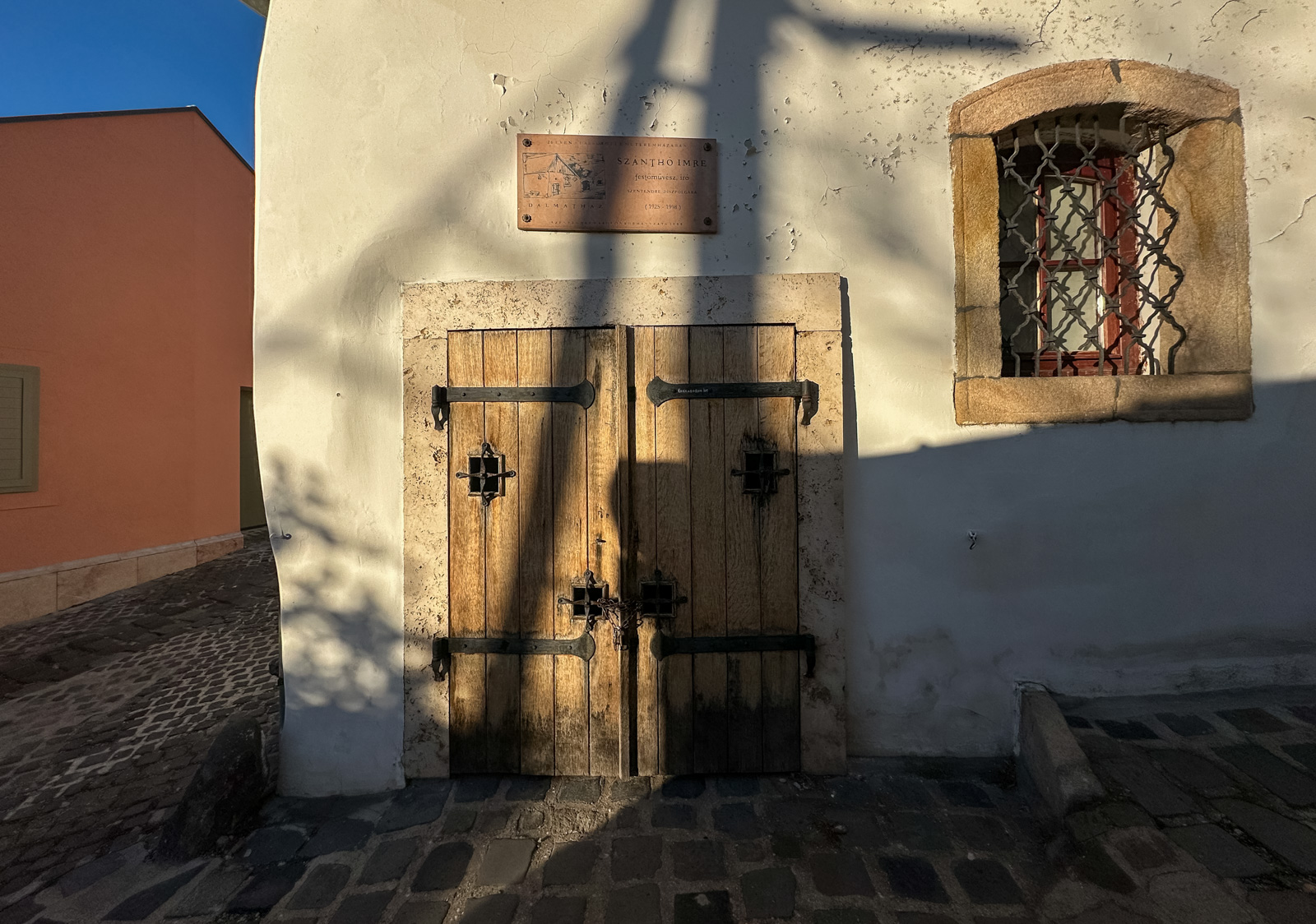
A plaque above its wooden shutters tells us that Imre Szánthó (1925–1998) spent twenty years working here. He was a painter, a writer and an honorary citizen of Szentendre.

But the house has another story.
On one of its walls hangs an old wrought-iron sign: a pair of scissors with little snake heads at the ends.
The scissors once belonged to a tailor’s shop on Görög utca. They were made by another local artist, László Balogh.
A photograph from 1964 shows the scissors hanging outside the shop, in their original place.
When the shop closed, Szánthó bought the sign and brought it to his Dalmatian House, where it still hangs today.
In the afternoon sunlight, the scissors are joined by a second pair — their own shadow on the wall.
And here’s the surprising part.
We’ve already come across another place connected to this artist.
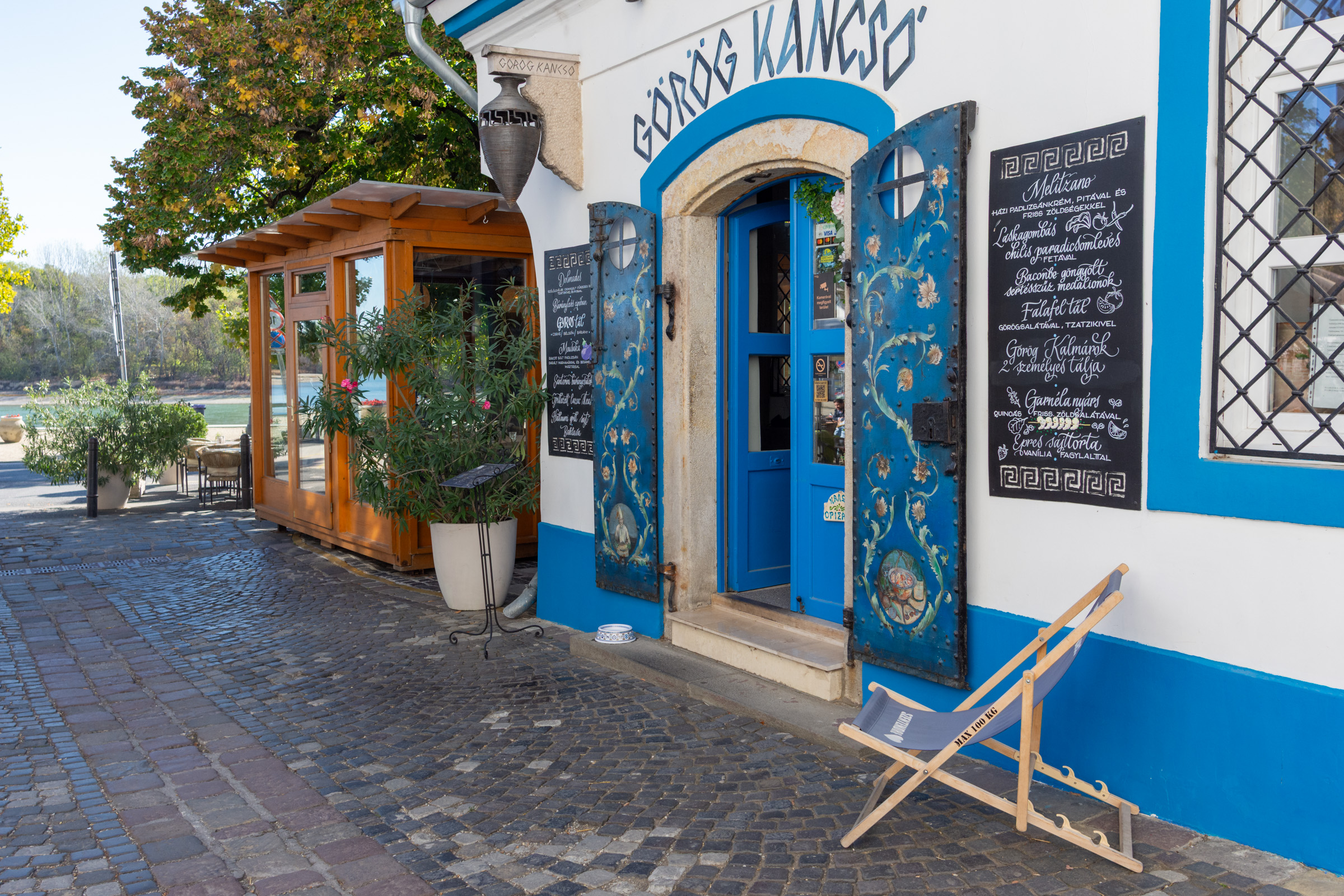
Remember the bright blue Görög Kancsó restaurant by the Danube, in the photograph at the beginning of our promenade chapter?
When the restaurant opened in 1961, Szánthó designed its original wrought-iron sign — a Greek jug, a glass and a grapevine. He also painted a fresco of Szentendre inside.
So the artist who gave the Greek restaurant its sign was also the man who gave the old tailor’s scissors a second life.
The story
Szentendre’s Outdoor Art:
From Ceramic Walls to a Painted Bridge

Szentendre became an important centre for artists after the founding of its art colony in 1926. Today there are museums and galleries around the old centre, although some of the most interesting details are outside their doors.
On the Görög utca side of the Margit Kovács Museum, little ceramic faces and figures emerge from a wall of reddish terracotta. The entire façade is covered in ceramic tiles, with small sculpted details scattered across its surface.
The wall was created as part of the museum’s 2011 extension, designed by architect József Kocsis. Four local sculptors contributed the reliefs, including Tamás Asszonyi.
His name might sound familiar. He’s the artist behind the three bronze birds at the fountain on the Danube promenade.
Beside its old Baroque gateway is a small terracotta relief of a potter at work. It was made by Margit Kovács herself in 1929, more than forty years before the museum opened.

Her interest in pottery began much earlier, when she was growing up in Győr. As a child, she became fascinated by the clay used by a local stove-maker. Her family eventually bought a potter’s wheel and set it up in their attic, where the stove-maker’s nephew taught her how to use it.
But there is more to Szentendre’s ceramics than its museums.
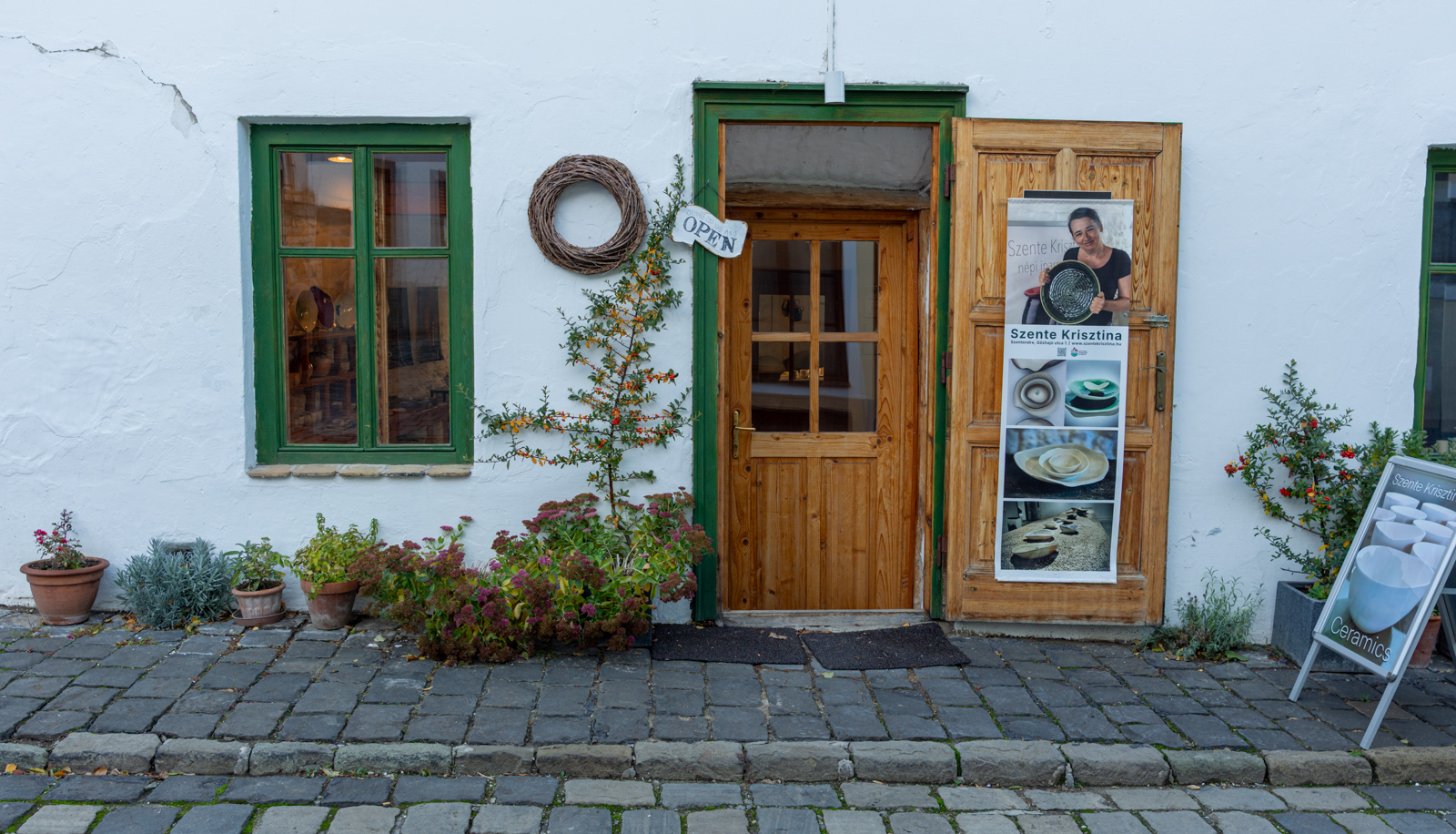
On Gőzhajó utca, near the Danube, a white house with green windows is home to the ceramics studio of Krisztina Szente.
She began by making traditional Hungarian pottery, including decorated baking dishes. Later, while teaching in China, she experimented with local clays and porcelain. Her more recent work focuses on contemporary porcelain pieces.
Her studio is tucked away on a small street in Szentendre. Her ceramics, meanwhile, have found their way into public collections as far away as Seoul and New York.
Visitors to her studio can watch her work and even sit down for a cup of tea. And after more than thirty years of working with clay, she says one of her favourite moments is still opening the kiln to see what has emerged.
Some works of art, however, are a little harder to move.
One day, while wandering through Szentendre, I came across something I hadn’t expected: a portrait made from peeling plaster!
Who knew a crumbling wall had such artistic potential?
The portrait turned out to depict Lajos Vajda (1908–1941), one of the leading figures of the Hungarian avant-garde.

What makes this portrait so unusual is the technique. Instead of painting over the damaged wall, someone used the damage itself. The pale plaster forms Vajda’s face, while the exposed darker layer gives shape to his hair, features and clothing.
What might otherwise have been an ordinary crumbling wall had become a work of art.
The artist behind the plaster portrait remains unidentified. But a photograph of Vajda taken in Szentendre in 1939 offers an interesting clue. The pose and silhouette are strikingly similar, suggesting that this photograph may have inspired the work.
In the 1930s, Vajda and fellow artist Dezső Korniss explored Szentendre, sketching its old façades, gates, windows and other architectural details. Vajda later brought these shapes into his work, combining elements of architecture, folk art and avant-garde painting.
The artist who once searched for images on Szentendre’s old walls had become an image on one of them.
And Szentendre’s walls have more stories to tell. Near the Bükkös stream, there’s another art gallery, although this one has no doors.
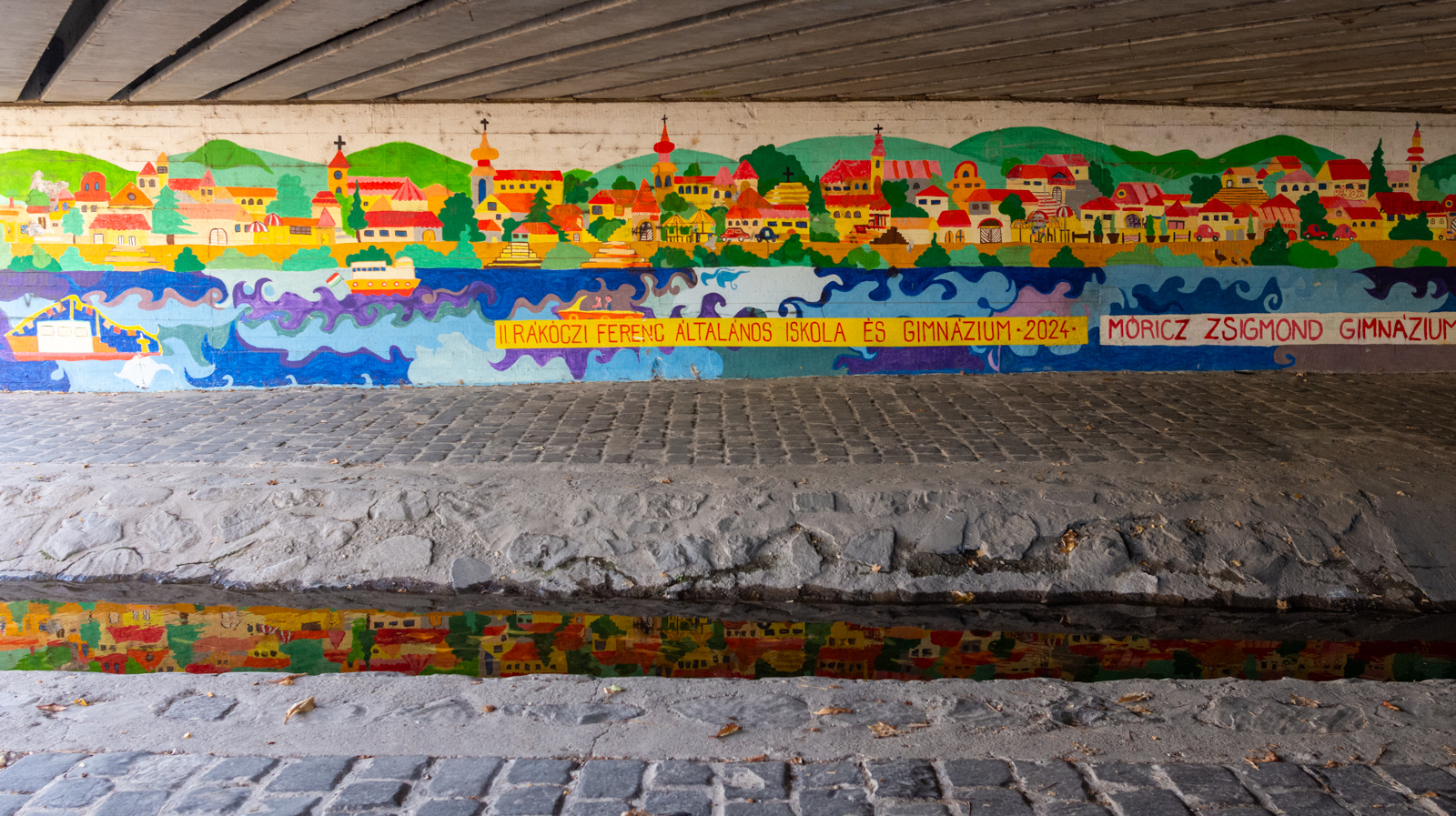
Beneath the bridge carrying Road 11, the concrete walls are covered with colourful paintings of houses, church towers, hills and boats.
The artists were students from Szentendre’s Móricz Zsigmond Gimnázium, working with their art teacher, Kinga Bádonyi.
In 2023, Bádonyi recalled how the students had painted the underpass and later returned to restore the murals.
And in October 2024, students were back again, refreshing the paintings and helping to care for the banks of the Bükkös stream.
It wasn’t only the artists of the past who left their mark on Szentendre’s streets. Today’s schoolchildren are painting their own town, too.
The story
The Catholic Calvary:
Fourteen Stations and Ten Akó of Wine
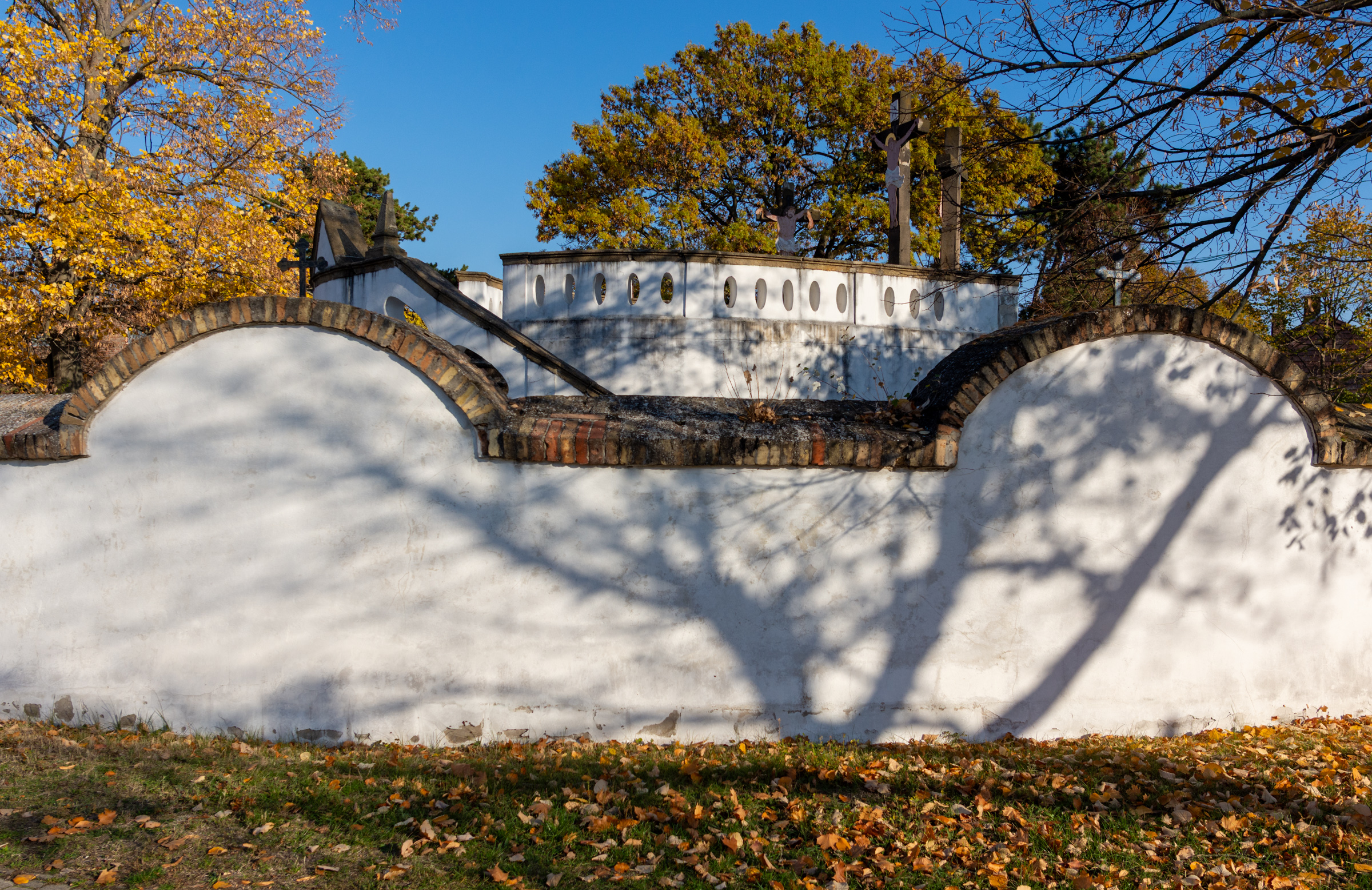
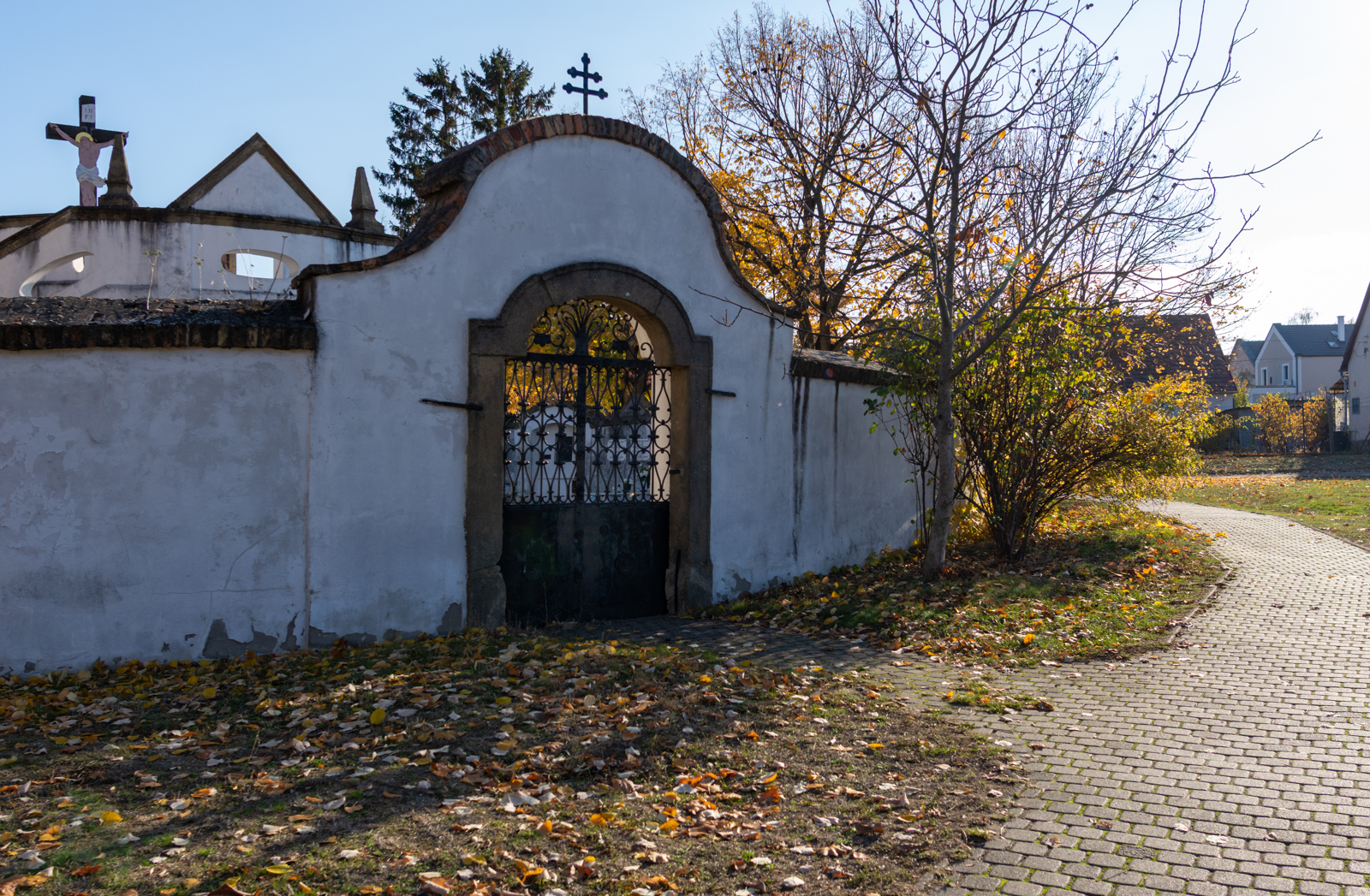
Away from the old town, on a hill once known as St George’s Hill, stands Szentendre’s Catholic Calvary.
Behind its white oval walls are a small chapel, three crosses and fourteen Stations of the Cross.
The Calvary was built in 1762, and the chapel was blessed the following year. Much of the work was paid for through parish funds and donations, with local people helping in the construction.
One of those donations might seem unusual today.
In 1752, a local resident named György Sambati left ten akó of wine in his will towards building a chapel on the hill. An akó was an old Hungarian measure for liquids.
So even in the history of this religious monument, we find a trace of Szentendre’s old wine-growing economy!
The Calvary has changed quite a bit since then.
The fourteen Stations of the Cross were originally paintings, later replaced by reliefs in 1903.
Even the three crosses rising above the chapel aren’t the originals. They were donated in 1874 by Anna Jakabbfy, replacing the earlier stone crosses.
And there’s something else behind the white walls.
Between the Stations of the Cross and beside the chapel are old graves, including that of Ferenc Stéger, the opera singer born in Szentendre.
His name appears elsewhere in town, too — on a memorial plaque at Dumtsa Jenő utca 10.
A name on an ordinary house, and a grave on a quiet hillside. Two small traces of the same life.
The story
Templomdomb: The Medieval Heart of a Baroque Town
Back on Templomdomb, where this story began, old trees cast shifting shadows across the cobblestones, the church’s white walls and the cross standing beside it. As the afternoon light changes, patterns of leaves and branches move across the old stone.
From the shadows dancing across the church walls today, the story takes us back almost seven hundred years, when people here were already measuring time by the sun.
High on the southern side of the church, almost six metres above the ground, is a small sundial dating back to the early 1300s.
It measures just 32 × 35 centimetres. A thin metal pointer casts a shadow across lines carved into the stone, showing the passage of time.
This small piece of carved stone is considered one of the oldest surviving objects in the history of astronomy in Hungary.
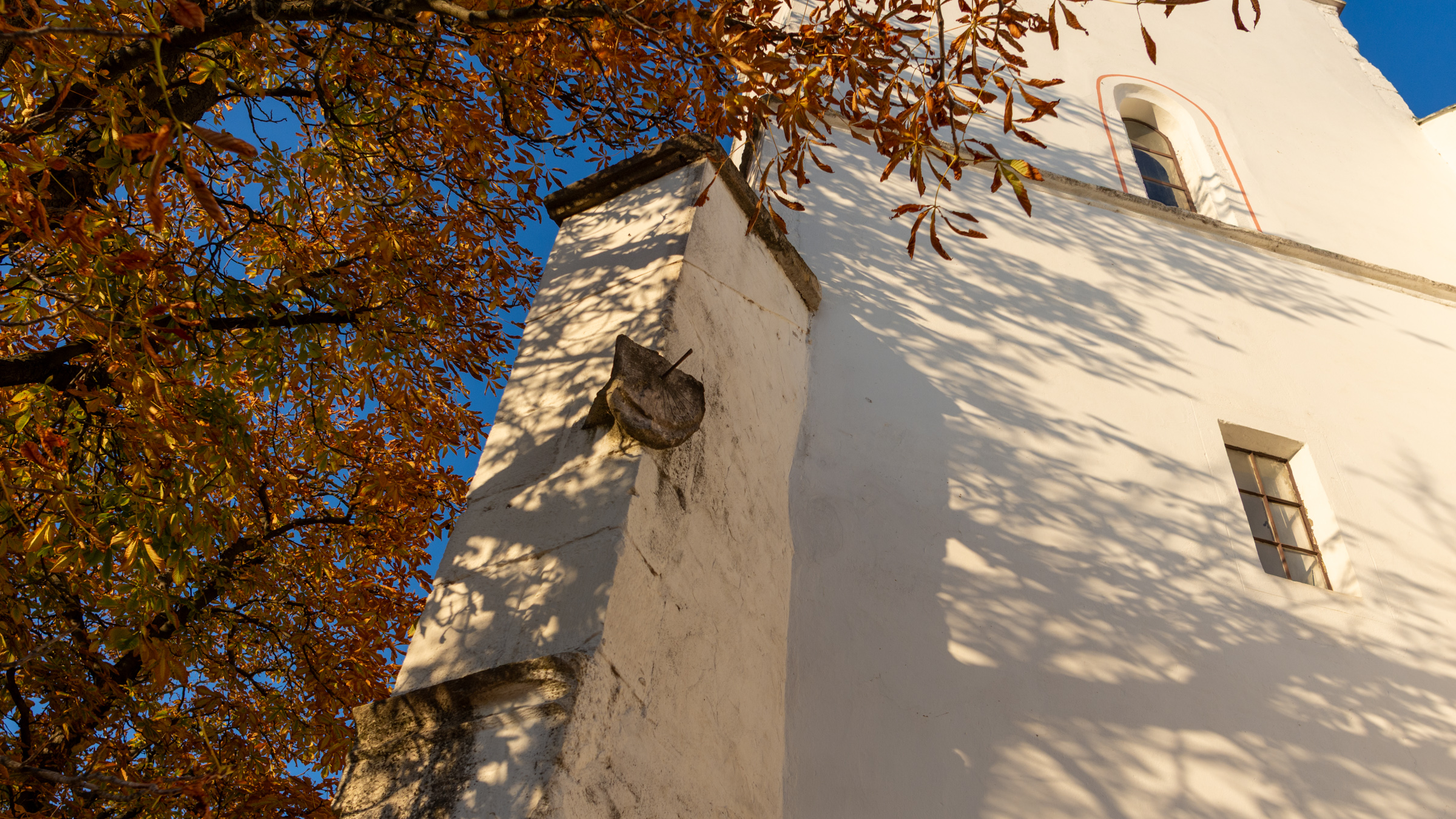
The sundial existed long before the great Serbian migration of 1690. By the time thousands of settlers arrived in Szentendre, it was already more than three hundred years old.
But here’s another interesting detail: the church didn’t simply preserve a medieval object. It has medieval origins itself.
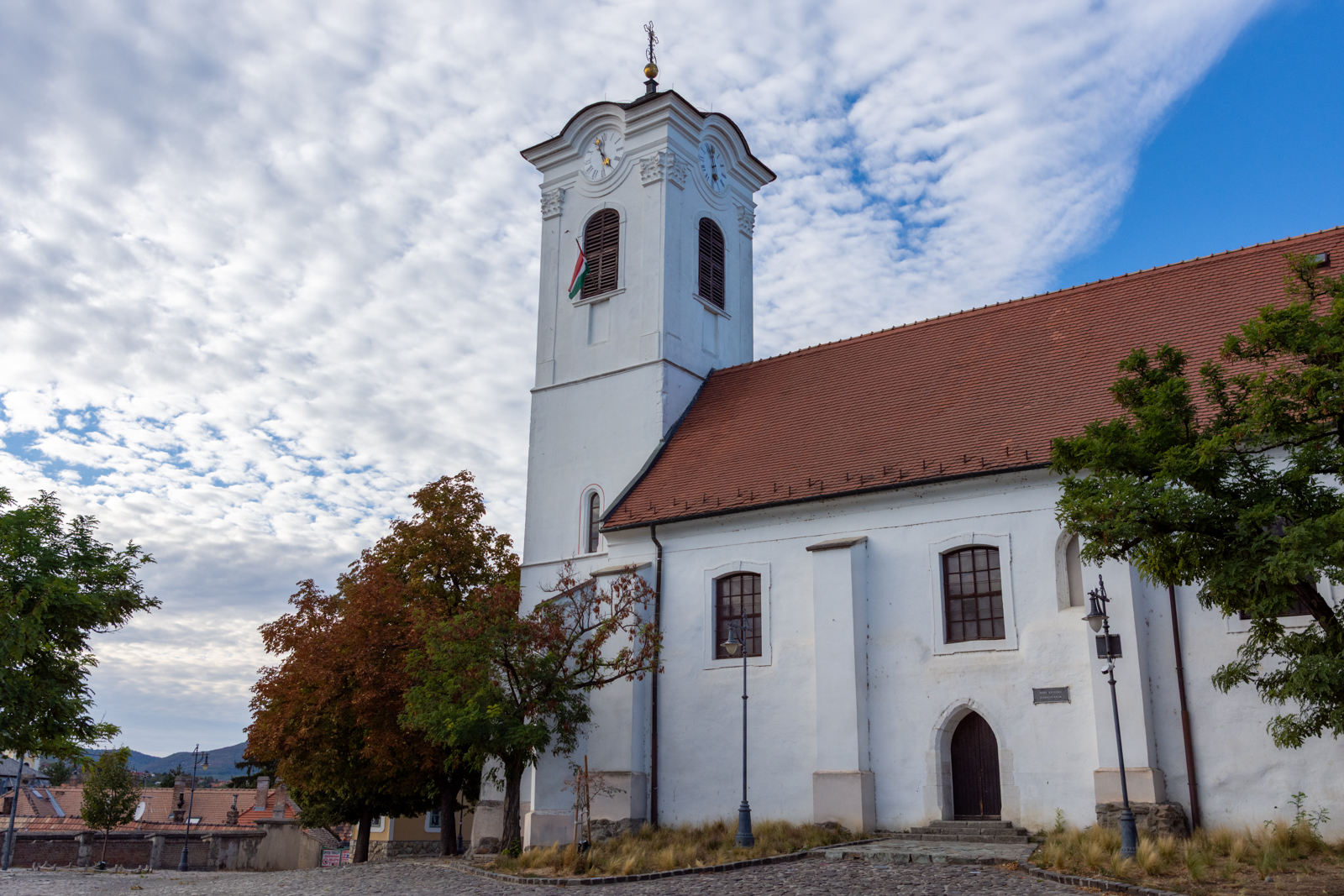
Long before the Ottoman armies reached Hungary, a church was already standing on this hill.
In fact, its history reaches all the way back to the Mongol invasion of Hungary in 1241–1242.
According to the local parish’s history, an earlier church was damaged during the invasion. The building we see today began to take shape on the same site later in the thirteenth century.
Its tower was added in the early 1300s, around the time the little sundial was carved.
Then came the Ottoman occupation, further destruction and, eventually, the great rebuilding of the eighteenth century. The church acquired its Baroque appearance, but much of its medieval structure survived.
Inside is another unusual detail. In the 1930s, local artists painted biblical scenes with familiar Szentendre buildings in the background. One even includes the Town Hall, and some figures were modelled on local residents.
Imagine coming to church and finding your neighbour among the biblical figures.
The Path of Life: Eighteen Poems on a Church Hill
Around the old church on Templomdomb, beneath the trees, runs a little path marked by eighteen metal plaques.

It’s called Élet Útja Ösvény — the Path of Life.
Each plaque carries a passage from Hungarian poetry, following the stages of a human life — from its beginning through love, marriage, family, growing older and, eventually, saying goodbye.
The first stop is called Az ember — The Human Being.
On its plaque are four lines from A Teremtőhöz, a poem by István Vas:
Thank you for creating me,
— István Vas, A Teremtőhöz (opening four lines). Translated from Hungarian for this article.
O Love, and placing me here,
that among stars, mists and mountains
I might be human.
There is a remarkable tenderness towards human existence in these lines. Not for what a person might achieve, or the constant need to be someone better, but for the simple wonder of being alive in a world of such extraordinary beauty.
Farther along the path, at stop 13, Szeretet — Love — are these lines by Sándor Weöres:
For that one day alone
— Sándor Weöres, Üdvösség (excerpt). Translated from Hungarian for this article.
it was worth being born:
the day I could love
without asking
whether I was loved.
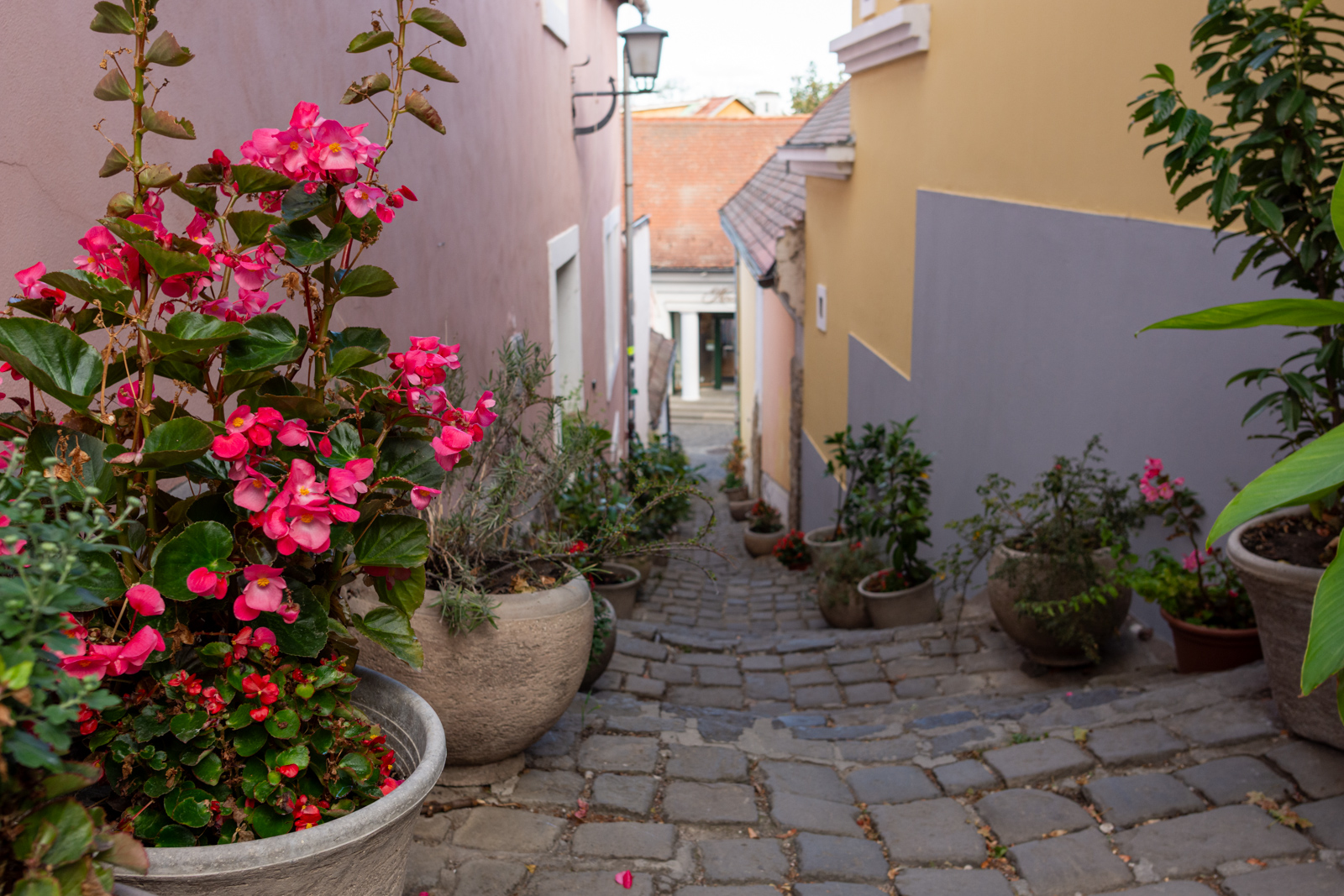
There is a quiet freedom in these lines. The need to feel wanted or valued by someone else simply falls away.
The path was inaugurated on 9 June 2018, during Hungary’s Year of Families. The Franciscan friar Csaba Böjte came to bless its eighteen plaques.
That day, a young couple had just married in the church beside it. As they emerged from the church, Böjte gave them his blessing, too.
A few steps away, the poems continued beyond love and marriage, through growing older and eventually saying goodbye.
For the newlyweds, all those years still lay ahead.
The Old Trees of Templomdomb: A Hundred Years of Shade
On Templomdomb grow old robinia trees, known in Hungary as akác.
According to Szentendre’s head gardener, Attila Hazai, they are well over a hundred years old. Their exact age remains uncertain — finding it out would require a little research in the town’s archives.
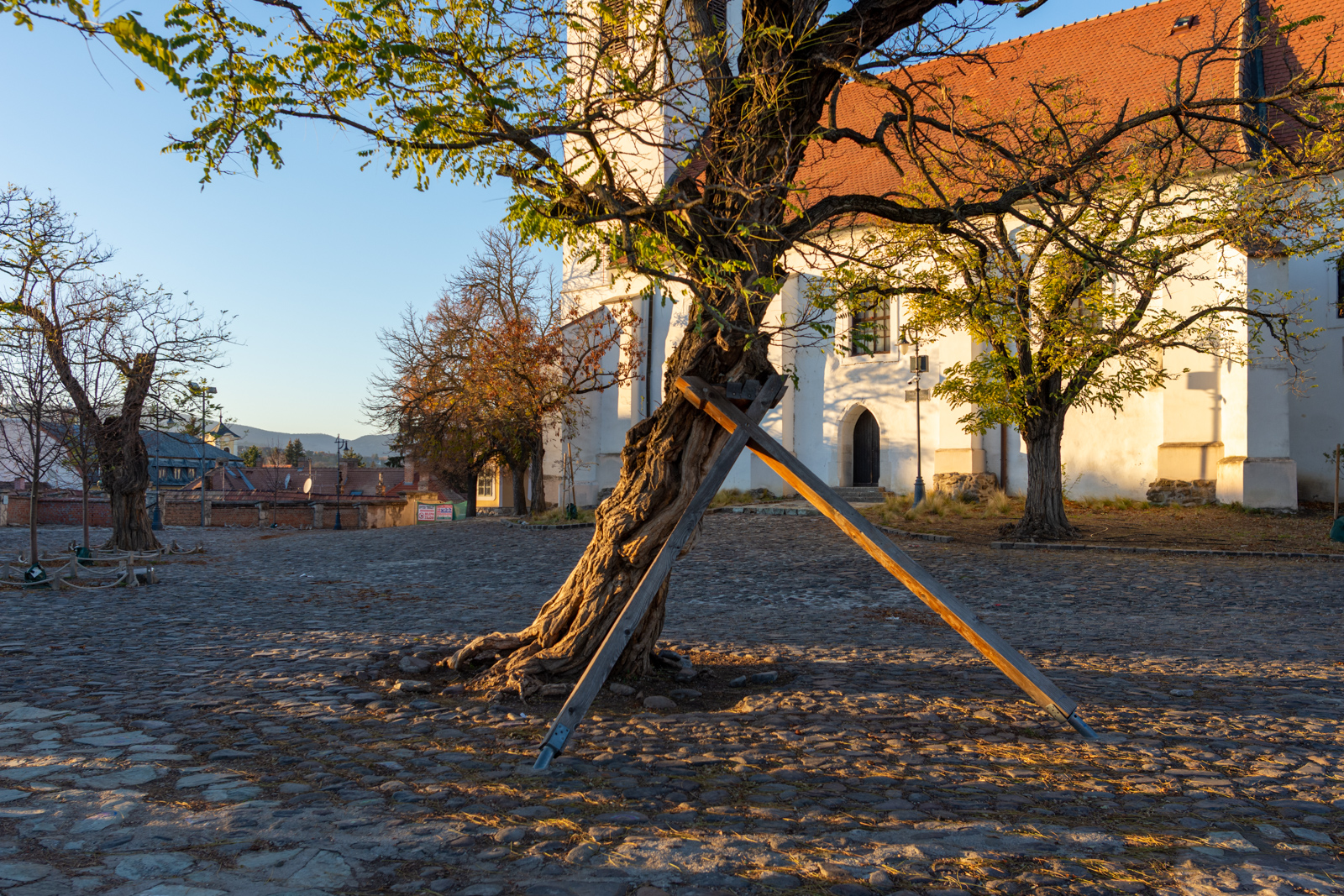
In May 2021, the trees acquired an unusual group of caretakers.
A team of arborists called Dzsindzsa Nindzsa — roughly, Ninjas of the Undergrowth.
The name has a story of its own. Dzsindzsa refers to overgrown vegetation, while Nindzsa comes from the team’s habit of climbing trees with ropes and climbing equipment, moving through the branches with something resembling a ninja’s agility.
The team decided to adopt the old trees, taking responsibility for removing dead branches, caring for their crowns and building wooden supports for those that needed help standing.
In 2022, the effort grew into a larger community project. Other specialists, volunteers, local schoolchildren and city workers joined in. Together, they loosened and improved the soil, planted new trees and flowers, and helped bring greenery back to the hill.
The old robinias are still here, casting their shadows across the church walls.

The story
Szentendre: The Name That Survived the Centuries
There’s one last story about the old church on Templomdomb. And it begins long before the white walls we see today.
The church is now dedicated to St John the Baptist.
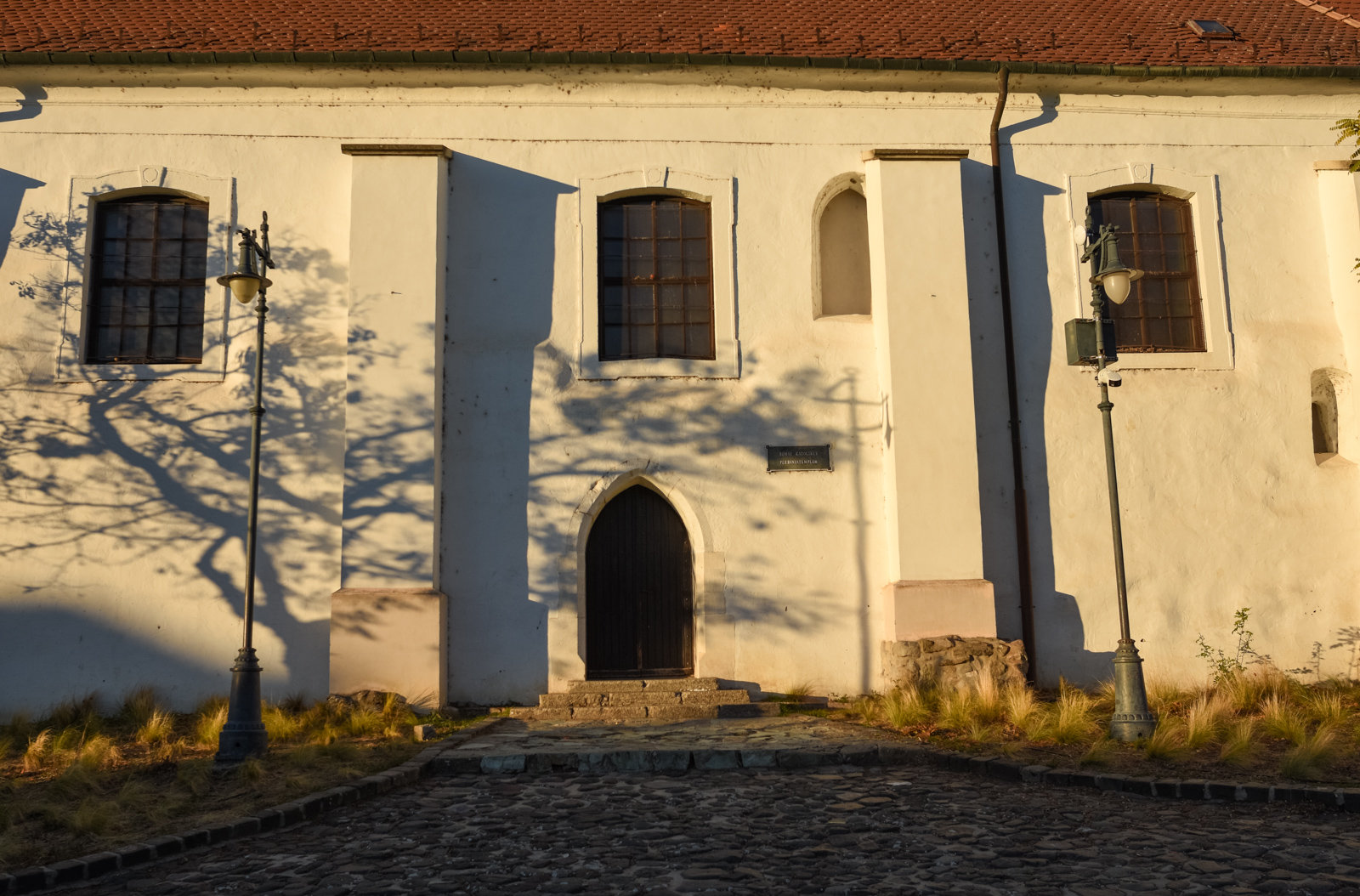
But in the Middle Ages, the church on this hill belonged to another saint.
St Andrew the Apostle.
His name appears in a document from 1146 — long before the sundial was carved, and almost a hundred years before the Mongols invaded Hungary.
That year, a cleric named Fulco made his will in Szentendre.
Fulco had come to Hungary from abroad and spent much of his life working as a scribe, first for Prince Álmos and later for an archbishop and several bishops.
By then, he had grown old, and there was quite a bit to arrange: an estate with a house, fields, meadows and three vineyards. He gave some of his property to the Benedictine monastery at Pannonhalma, while another estate was left to his only daughter, under certain conditions.
The document even tells us where:
Actum est hoc in curia episcopali Sancti Andree secus Danubium…
“Done at the episcopal residence of St Andrew beside the Danube.”
Fulco was simply putting his affairs in order. Centuries later, his will would help us trace the name of an entire town.
Over time, the Latin name took on Hungarian forms. András and Endre were historically related names for Andrew, and by 1330, a document referred to the town as Schenth Endre.
The spelling may look unfamiliar, but the name is already recognisable.
The town had taken its name from the saint to whom the old church was dedicated.
But people had lived here long before the name St Andrew appeared in writing.
In 1009, King Stephen I of Hungary issued a royal document granting a village beside the Danube to the Bishop of Veszprém.
The document didn’t give the village’s name. Instead, it described its location near the mouth of a stream called Aporig.
Historians identify Aporig with today’s Bükkös stream, which still flows through Szentendre. That is why they believe the unnamed village was an early settlement on the site of the town.
And by 1146, the Bishop of Veszprém had a residence here — the very place mentioned in Fulco’s will.
But the church’s own story didn’t end there.
After centuries of wars and rebuilding, it came into the care of a Catholic community with strong Dalmatian roots. Local historians believe these settlers helped give the church its new dedication to St John the Baptist.
By 1732, church records already used that name, although the exact date of the change had been forgotten.
And here’s a lovely detail.
In 1752, a local resident made arrangements for his burial. Despite the church’s new dedication, he still referred to it as the Church of St Andrew.
The old name was not so easily forgotten.
Today, the white church on Templomdomb belongs to St John the Baptist.
But nearly nine hundred years later, St Andrew’s name is still spoken here every day — in the name of the town itself.